







Program Introduction
Overview of A-HXP®, the industry need for AI-enabled hospitality, target professionals, key focus areas, and how the program builds practical competencies for intelligent guest experience management.

AAPSCM® Certification
Professional Certification in Artificial Intelligence, Guest Experience Management, Smart Hospitality Technologies, and Digital Innovation
Develop the knowledge and practical skills to apply AI, data analytics, and digital technologies to create smarter, more personalized, and more responsive hospitality and tourism experiences.
Developed and Awarded by AAPSCM®The A-HXP® is a professional certification that provides a comprehensive foundation in the application of artificial intelligence (AI), data analytics, and digital technologies to enhance hospitality guest experiences, operations, and customer engagement.
| Certification | Certified AI-Powered Hospitality Experience Professional |
|---|---|
| Designation | A-HXP® |
| Exam Format | Multiple Choice (100 Questions) |
| Exam Duration | 90 Minutes |
| Passing Score | 70% |
| Delivery Mode | Online or Authorized Testing Centers |
| Exam Fee (Exam Only) | US $399.00 |
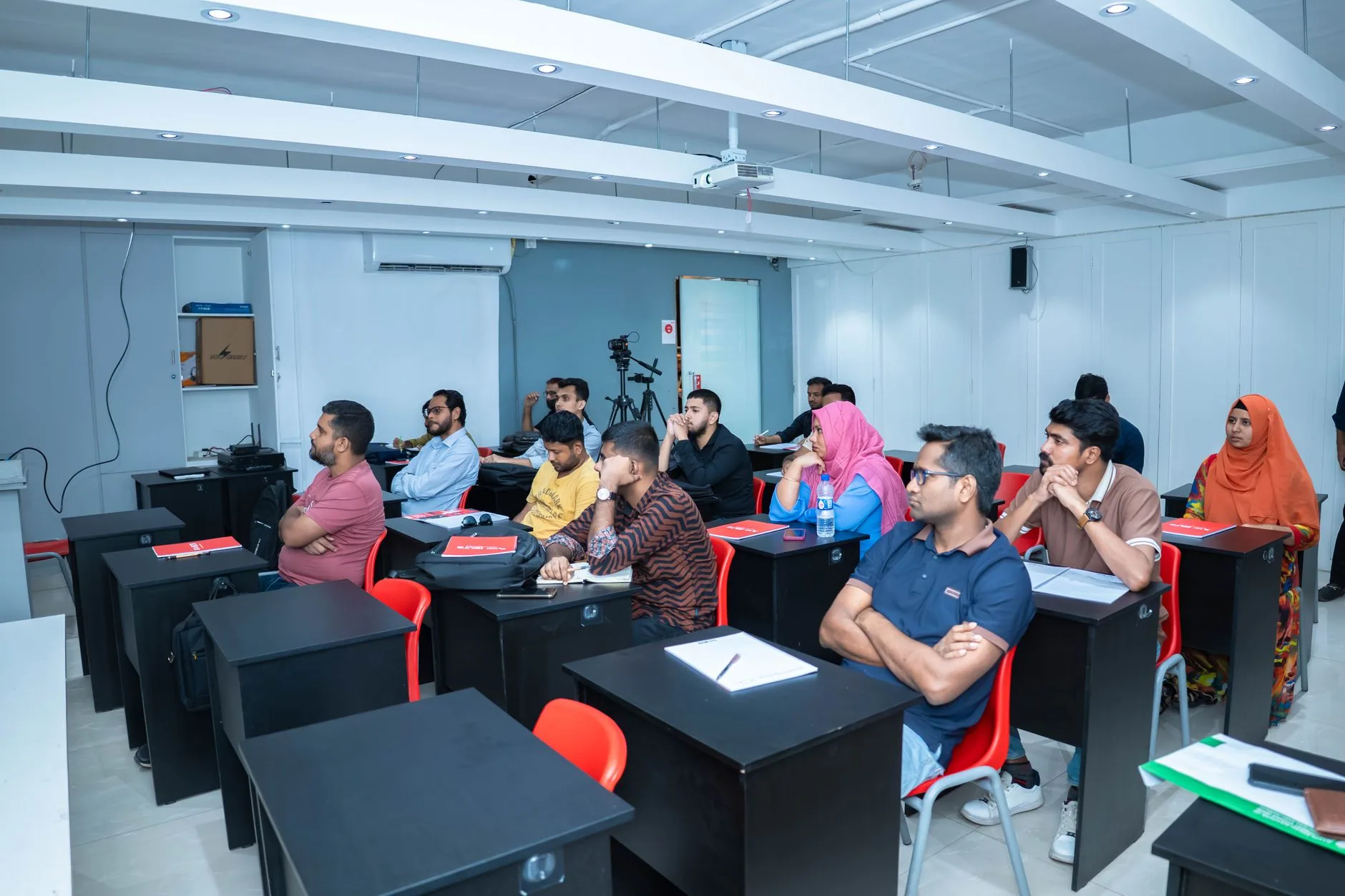
| Training Fee | $1,250 USD (In-Person/HyFlex) |
| Certification Level | Foundational / Professional |
|---|---|
| Curriculum | 8 Modules | 24 Submodules |
| Exam Questions | 100 (Multiple Choice) |
| Exam Duration | 90 Minutes |
| Passing Score | 70% |
| Delivery | Online or Authorized Testing Centers |
| Exam Fee (Exam Only) | US $399.00 |
| Training | $1,200 USD (Virtual) | $1,250 USD (In-Person) |

Everything about this certification in one place. Swipe sideways or use the arrows to explore each section.
Overview of A-HXP®, the industry need for AI-enabled hospitality, target professionals, key focus areas, and how the program builds practical competencies for intelligent guest experience management.
| Exam Format | Multiple Choice |
|---|---|
| Total Questions | 100 |
| Exam Duration | 90 Minutes |
| Passing Score | 70% |
|---|---|
| Delivery | Online Proctored |
| Language | English |
The global hospitality and tourism industries are experiencing significant technological transformation. Artificial intelligence, data analytics, automation, connected devices, digital service platforms, and intelligent customer engagement systems are changing how hospitality organizations understand guest expectations, manage service delivery, and develop long-term customer relationships.
Today's travelers increasingly expect convenient reservations, personalized recommendations, seamless check-in experiences, timely communication, responsive customer support, secure digital transactions, and consistent service across multiple channels.
Hotels, resorts, restaurants, cruise operators, travel companies, tourism destinations, and other hospitality organizations are exploring artificial intelligence to meet these expectations while improving operational coordination and service quality.
However, successful AI adoption requires more than installing new software. Hospitality professionals must understand how AI technologies operate, how guest information should be managed, where automation can improve service, when human intervention remains essential, and how organizations can evaluate the effectiveness of digital investments.
The Certified AI-Powered Hospitality Experience Professional (A-HXP®) certification, offered by the American Association of Procurement, Supply Chain & Tourism Management (AAPSCM®), is designed to develop foundational professional competencies in AI-enabled hospitality services, intelligent guest experience management, digital personalization, hospitality analytics, and responsible technology adoption.
The program introduces candidates to practical applications of artificial intelligence throughout the hospitality guest journey—from initial travel research and reservations to arrival, accommodation, service requests, departure, customer feedback, and post-visit engagement.
Participants explore how digital systems can help hospitality organizations better understand guest preferences, identify service opportunities, respond to customer needs, improve communication, and strengthen organizational performance.
The certification also emphasizes responsible AI use, guest privacy, information security, accessibility, cultural sensitivity, and the continued importance of human judgment in hospitality service delivery.
A-HXP® — Advancing Intelligent Guest Experiences, Digital Hospitality Excellence, and Responsible AI Innovation.
The Certified AI-Powered Hospitality Experience Professional (A-HXP®) is a foundational professional certification focused on the application of artificial intelligence, data analytics, digital platforms, and smart technologies to hospitality guest experience management.
It introduces the concepts, tools, operating practices, and professional responsibilities involved in designing, supporting, and evaluating AI-enabled hospitality services.
The certification addresses the relationship between guest expectations, service operations, hospitality technologies, customer data, and organizational performance.
A-HXP® is particularly relevant to professionals who interact with guests, coordinate hospitality services, support digital platforms, participate in marketing and customer engagement, or contribute to hospitality technology improvement initiatives.
The certification aims to establish a structured foundation in AI-powered hospitality experience management and support the responsible application of digital technologies.
Its primary objectives are to:
Hospitality is fundamentally a people-centered service industry. The value of technology lies in its ability to support employees and improve guest experiences rather than simply replace personal interaction.
AI-enabled systems can assist hospitality professionals by analyzing service patterns, organizing customer information, identifying guest preferences, automating routine inquiries, and supporting timely decision-making.
For example, a hotel may use a digital concierge to answer common questions about check-in times, dining options, or transportation. This allows front-desk employees to devote more attention to complex requests and personalized guest assistance.
Similarly, a resort may analyze guest feedback to identify recurring complaints about room readiness, dining service, or recreational facilities.
When implemented appropriately, these technologies can help organizations improve responsiveness, consistency, and operational awareness.
The effectiveness of such systems depends on data quality, employee training, technology reliability, governance, and appropriate human oversight.
Understand essential AI concepts, including machine learning, predictive analytics, natural language processing, recommendation systems, and intelligent automation.
Learn how to evaluate the guest journey and identify opportunities to improve service convenience, communication, personalization, and satisfaction.
Explore how hospitality organizations use guest preferences, service history, and permitted customer data to provide relevant recommendations and customized experiences.
Understand how dashboards, customer feedback, satisfaction measures, and operational data support guest experience improvement.
Explore smart room systems, connected devices, digital access solutions, automated service requests, and intelligent hospitality infrastructure.
Develop awareness of mobile guest applications, digital concierge services, AI chatbots, omnichannel communication, and customer relationship management platforms.
Understand how analytics and AI-assisted marketing tools can help organizations segment audiences, personalize communications, and evaluate marketing effectiveness.
Recognize the importance of privacy, consent, cybersecurity, fairness, transparency, accessibility, and human oversight when using AI in hospitality.
Develop the knowledge needed to participate in technology evaluation, employee training, process improvement, and AI adoption projects.
Show that you have completed a structured certification assessment covering foundational AI-enabled hospitality competencies.
The credential complements professional experience and education; it does not guarantee employment, promotion, or recognition by every employer.
A-HXP® introduces candidates to the functions and professional applications of technologies used in hospitality organizations.
Representative platforms:
Representative technologies:
Representative tools:
Representative technologies:
Representative technologies:
Technology Access Clarification: The listing of commercial platforms is for educational reference. It does not mean that A-HXP® includes vendor-specific certifications, paid software licenses, platform subscriptions, or commercial partnerships.
| Domain | Knowledge Area | Core Professional Competencies |
|---|---|---|
| 1 | Foundations of AI in Hospitality | AI concepts, hospitality technology evolution, practical applications |
| 2 | Guest Experience Design and Personalization | Guest journeys, service design, personalization, recommendation systems |
| 3 | Hospitality Data and Guest Analytics | Guest data, analytics dashboards, service performance insights |
| 4 | Smart Hospitality Technologies | Smart infrastructure, IoT, connected rooms, automated services |
| 5 | Digital Guest Engagement Platforms | Mobile applications, chatbots, digital concierge, omnichannel engagement |
| 6 | AI-Driven Hospitality Marketing | Digital marketing, customer segmentation, analytics, personalized communications |
| 7 | Governance and Ethics in Hospitality AI | Data privacy, security, responsible AI, compliance |
| 8 | Digital Transformation in Hospitality | Innovation strategy, technology adoption, change management, emerging trends |
Upon completing the recommended learning activities, candidates should be able to:
The A-HXP® curriculum is organized into eight interconnected modules. Each module contains three specialized submodules, practical examples, and recommended learning activities.
This module introduces the development of hospitality technologies, the fundamentals of artificial intelligence, and the practical ways AI supports guest services and hospitality operations.
Participants explore the differences between traditional automation, data analytics, machine learning, and generative AI.
Understand how hospitality technology has evolved from manual service processes to connected digital platforms.
Compare a traditional hotel guest journey with a digitally enabled guest journey.
Explain the capabilities and limitations of major AI technologies without requiring programming expertise.
Classify common hospitality technologies according to whether they use rule-based automation, analytics, machine learning, or generative AI.
Identify practical AI use cases and evaluate their potential benefits, risks, and operational requirements.
Develop a basic AI opportunity assessment for a hotel or resort.
Recommended deliverables:
This module examines how hospitality organizations design, evaluate, and improve guest experiences through personalization, customer journey mapping, and AI-powered recommendations.
Understand how guest interactions across different departments contribute to the overall hospitality experience.
Create a guest journey map identifying digital touchpoints, employee interactions, and service improvement opportunities.
Explain how hospitality organizations can deliver relevant experiences without compromising privacy or guest autonomy.
Design a personalized guest service plan using a fictional guest profile.
Understand how recommendation systems support guest engagement and how their outputs should be evaluated.
Develop a conceptual recommendation workflow for hotel services and local attractions.
Recommended deliverables:
This module introduces hospitality data sources, customer analytics platforms, and the use of information to evaluate guest satisfaction and service performance.
Identify common sources of guest information and understand the responsibilities associated with collecting and managing customer data.
Create a data inventory for a fictional hotel, identifying the purpose and sensitivity of each data category.
Interpret basic hospitality dashboards and identify operational insights.
Use a sample spreadsheet or dashboard to identify service performance trends.
Use basic analytics to recommend practical guest service improvements.
Analyze simulated guest feedback and develop a service improvement action plan.
Recommended deliverables:
This module explores connected hotel systems, Internet of Things (IoT) technologies, smart room infrastructure, and automated guest service applications.
Understand the purpose and operating requirements of smart hotel infrastructure.
Develop a smart room technology assessment for a selected hotel property.
Explain how connected devices support hospitality operations and recognize associated security and reliability considerations.
Identify IoT opportunities for improving guest comfort and reducing avoidable operational inefficiencies.
Evaluate how automation can improve guest convenience while preserving service accessibility and appropriate employee support.
Develop a service workflow for automated guest requests with clear human escalation procedures.
Recommended deliverables:
This module examines mobile hospitality applications, AI chatbots, digital concierge systems, and technology-enabled guest communications.
Understand how mobile applications support convenient and consistent guest experiences.
Evaluate a fictional hotel's mobile guest application and identify usability improvements.
Recognize suitable chatbot applications and situations requiring human assistance.
Develop a sample chatbot conversation flow for hotel guest inquiries.
Understand how organizations coordinate guest interactions across digital channels.
Create a guest engagement plan covering pre-arrival, in-stay, and post-stay communication.
Recommended deliverables:
This module examines how hospitality organizations use digital marketing platforms, AI-assisted analytics, and personalized communication strategies to engage prospective and returning guests.
Understand the role of digital marketing channels in hospitality customer acquisition and engagement.
Develop a basic digital marketing plan for a hotel, resort, or hospitality business.
Explain how marketing analytics can support campaign planning and evaluation.
Interpret a sample hospitality marketing dashboard and recommend campaign improvements.
Develop appropriate personalized communication strategies while respecting customer preferences and privacy.
Prepare a three-stage guest communication campaign for a fictional hospitality organization.
Recommended deliverables:
This module introduces responsible AI principles, guest data privacy, information security, governance, and compliance considerations relevant to hospitality technologies.
Recognize privacy and security responsibilities associated with hospitality customer information.
Develop a basic guest data protection checklist.
Identify potential harms associated with AI-enabled guest services and recommend appropriate safeguards.
Evaluate a hospitality chatbot or recommendation system using a responsible AI checklist.
Understand how hospitality organizations establish policies and oversight mechanisms for responsible technology use.
Prepare a proposed AI guest service governance policy for a hotel.
Recommended deliverables:
The final module integrates hospitality innovation, technology adoption, organizational change, and emerging AI trends.
Participants examine how hospitality organizations can evaluate digital opportunities and implement technology responsibly.
Understand how hospitality organizations identify, evaluate, and prioritize digital innovation opportunities.
Develop an innovation proposal addressing a common guest service challenge.
Recognize the organizational requirements involved in introducing new hospitality technologies.
Prepare a basic implementation plan for a digital guest service platform.
Evaluate emerging technologies and distinguish realistic operational applications from speculative claims.
Develop a future hospitality technology briefing identifying opportunities, limitations, and implementation considerations.
Recommended deliverables:
The certification examination assesses foundational knowledge of AI-enabled hospitality technologies and the ability to interpret practical guest experience scenarios.
| Examination Component | Requirement |
|---|---|
| Certification | Certified AI-Powered Hospitality Experience Professional |
| Designation | A-HXP® |
| Examination Format | Multiple-Choice Questions |
| Number of Questions | 100 |
| Examination Duration | 90 minutes |
| Passing Score | 70% |
| Language | English |
| Primary Focus | AI-Enabled Hospitality and Guest Experience Management |
Candidates should demonstrate knowledge of:
The examination may include:
Candidates should:
This pathway is designed for candidates who prefer to prepare independently for the professional certification examination.
This pathway provides guided professional instruction in the certification's principal knowledge areas.
| Day | Core Training Areas |
|---|---|
| Day 1 | Foundations of AI, Guest Experience Design, and Personalization |
| Day 2 | Hospitality Data Analytics and Smart Hospitality Technologies |
| Day 3 | Digital Guest Engagement and AI-Driven Hospitality Marketing |
| Day 4 | Responsible AI, Data Governance, Digital Transformation, and Examination Preparation |
Candidates may require independent study beyond the eight live instructional hours to cover the full curriculum.
This pathway is intended for candidates seeking classroom-based or hybrid participation.
Customized training may be arranged for hospitality businesses and professional teams.
Potential participating organizations include:
The certification provides knowledge relevant to professionals working in or preparing for roles involving hospitality services, digital guest engagement, and technology-supported customer experience management.
Career Clarification: The certification supports professional knowledge development but does not establish eligibility for every listed position or guarantee employment, promotion, compensation, or advancement.
Professionals responsible for hotel operations, guest services, hospitality teams, service quality, and operational improvement.
Front-desk employees, reservations personnel, concierge teams, housekeeping coordinators, and other employees involved in guest service delivery.
Individuals responsible for customer satisfaction, guest communication, complaint resolution, service recovery, and relationship management.
Professionals supporting property management systems, guest applications, digital services, hospitality platforms, and technology implementation.
Travel consultants, tourism coordinators, destination service personnel, and professionals working with digital travel and visitor engagement systems.
Marketing coordinators, customer engagement specialists, loyalty program personnel, and professionals working with digital hospitality marketing.
Professionals interested in AI-supported traveler communication, digital service delivery, customer analytics, and experience personalization.
Owners and operators of hotels, boutique accommodations, guesthouses, restaurants, tourism services, and other hospitality enterprises.
Individuals advising hospitality organizations or delivering professional training in guest experience management and digital innovation.
Individuals seeking foundational knowledge of AI applications in hospitality and tourism.
Recommended Entry Knowledge: Familiarity with basic hospitality or customer service concepts and routine computer use is beneficial. The program does not require advanced programming or machine learning development skills.
The AAPSCM® AI Hospitality Experience Framework organizes the certification's core concepts into five complementary areas.
| Framework Pillar | Professional Focus | Expected Application |
|---|---|---|
| AI Hospitality Strategy | Understanding AI opportunities and operational objectives | Identifying appropriate hospitality AI use cases |
| Guest Experience Intelligence | Interpreting guest feedback, preferences, and service performance | Recommending guest experience improvements |
| Personalized Guest Services | Understanding recommendation systems and personalized services | Supporting relevant, consent-based guest experiences |
| Digital Guest Engagement | Understanding mobile apps, chatbots, and digital concierge systems | Improving communication and service responsiveness |
| Responsible Hospitality AI | Privacy, fairness, security, transparency, and human oversight | Supporting ethical and accountable AI use |
The five pillars can be used to evaluate whether a proposed hospitality AI initiative is:
This is an AAPSCM® program framework and should not be described as an independently accredited international standard.
Hospitality experiences extend beyond hotels and resorts. Travelers interact with transportation providers, attractions, restaurants, destination organizations, booking platforms, and other service providers.
The AAPSCM® Smart Tourism and AI Hospitality Innovation Framework introduces a broader view of digital transformation across connected tourism and hospitality services.
Focus: Integrating AI into tourism and hospitality service objectives.
Key areas:
Focus: Using data and analytics to better understand visitor experiences.
Key areas:
Focus: Delivering relevant and responsive services.
Key areas:
Focus: Connecting hospitality technologies and digital destination services.
Key areas:
Focus: Protecting travelers and supporting accountable technology use.
Key areas:
A destination organization could apply the framework to evaluate a proposed digital visitor platform that combines accommodation information, transportation guidance, attraction recommendations, and multilingual customer assistance.
The assessment would consider traveler convenience, data accuracy, technology accessibility, stakeholder coordination, privacy, and service performance.
The AAPSCM® AI Hospitality Maturity Model provides a conceptual structure for evaluating the progression from traditional hospitality services to advanced AI-enabled operations.
| Level | Maturity Stage | Characteristics |
|---|---|---|
| Level 1 | Traditional Hospitality Service Delivery | Primarily manual processes, limited digital integration, and employee-dependent service coordination |
| Level 2 | Digitally Enabled Hospitality Services | Online reservations, mobile communication, property management systems, and basic digital services |
| Level 3 | Data-Driven Guest Experience Management | Integrated guest information, performance dashboards, customer analytics, and evidence-based service improvements |
| Level 4 | AI-Enabled Personalized Hospitality Ecosystems | AI-supported recommendations, intelligent customer engagement, predictive insights, and connected digital services |
| Level 5 | Intelligent and Highly Automated Hospitality Platforms | Advanced orchestration, proactive service support, connected AI systems, and sophisticated automation with governance and human oversight |
Hospitality organizations may use the model to:
The model is a proposed developmental framework, not a formal third-party maturity rating or accreditation.
Hospitality organizations should evaluate AI and digital initiatives using appropriate performance measures.
| Indicator | Management Purpose |
|---|---|
| Guest Satisfaction Score | Measures overall satisfaction with hospitality services |
| Net Promoter Score | Evaluates guests' likelihood of recommending the organization |
| Guest Complaint Resolution Time | Measures responsiveness to customer concerns |
| Digital Service Adoption Rate | Tracks guest use of digital services |
| Chatbot Resolution Rate | Measures the percentage of inquiries resolved without human escalation |
| Human Escalation Rate | Tracks inquiries transferred from automated systems to employees |
| Guest Engagement Rate | Evaluates interaction with guest communication channels |
| Booking Conversion Rate | Measures successful bookings relative to relevant inquiries or visits |
| Repeat Guest Rate | Monitors returning customer activity |
| Customer Review Sentiment | Identifies positive and negative service feedback trends |
| Mobile Application Utilization | Measures guest engagement with mobile service applications |
| Service Request Response Time | Evaluates operational responsiveness |
| AI Output Accuracy | Assesses correctness of AI-generated service information |
| Privacy Incident Rate | Monitors recorded privacy-related incidents |
| Employee Digital Readiness | Evaluates workforce preparedness for technology use |
A hotel serves 500 guests during a reporting period, and 325 use its mobile check-in service.
Digital Service Adoption Rate = (325 ÷ 500) × 100 = 65%.
A digital concierge receives 800 guest inquiries. Of these, 600 are resolved without requiring human intervention.
Chatbot Resolution Rate = (600 ÷ 800) × 100 = 75%.
A high resolution rate should be evaluated alongside accuracy and guest satisfaction; resolving inquiries automatically is not beneficial if the information is incorrect.
A resort surveys 200 guests, and 170 report being satisfied or very satisfied.
Guest Satisfaction Rate = (170 ÷ 200) × 100 = 85%.
Average guest service response time decreases from 20 minutes to 12 minutes.
Response Time Reduction = ((20 − 12) ÷ 20) × 100 = 40%.
These examples are illustrative and do not represent actual performance outcomes from A-HXP® participants or hospitality organizations.
Scenario: A hotel receives frequent guest inquiries about breakfast hours, transportation, parking, and local attractions.
Candidate Task: Propose a digital concierge solution with appropriate human escalation.
Expected Output: Guest inquiry workflow and service improvement recommendations.
Scenario: A resort wants to recommend appropriate dining, recreation, and wellness services based on guest preferences.
Candidate Task: Develop a responsible personalization concept.
Expected Output: Personalization plan addressing relevance, consent, and accessibility.
Scenario: Customer reviews indicate recurring complaints about check-in delays.
Candidate Task: Analyze fictional guest feedback and recommend operational improvements.
Expected Output: Guest experience dashboard and improvement plan.
Scenario: A hotel seeks to improve energy efficiency without reducing guest comfort.
Candidate Task: Evaluate smart occupancy and room temperature technologies.
Expected Output: Smart hotel improvement proposal.
Scenario: A boutique hotel wants to improve communication with returning guests.
Candidate Task: Develop a personalized marketing approach using appropriately collected guest information.
Expected Output: Customer engagement campaign.
Scenario: A hotel chatbot provides incorrect information about cancellation policies.
Candidate Task: Identify service, governance, and reputational risks.
Expected Output: AI accuracy and escalation improvement plan.
Scenario: A hospitality organization proposes combining reservation history, loyalty data, and customer preferences across multiple systems.
Candidate Task: Identify privacy, access, security, and consent considerations.
Expected Output: Guest data governance checklist.
Scenario: A small hotel relies on manual service coordination and has limited digital guest engagement.
Candidate Task: Recommend a phased digital transformation plan.
Expected Output: Technology adoption roadmap with training and performance measures.
The A-HXP® curriculum incorporates concepts relevant to recognized management, technology, information security, and hospitality service frameworks.
| Standard or Framework | Relevant Educational Application |
|---|---|
| ISO 22483 | Tourism and related services — Hotels — Service requirements |
| ISO 9001 | Quality management systems |
| ISO/IEC 27001 | Information security management systems |
| ISO/IEC 42001 | Artificial intelligence management systems |
| ISO 56002 | Innovation management guidance |
| ISO 31000 | Risk management guidelines |
| ISO 21902 | Accessible tourism for all |
| NIST AI Risk Management Framework | AI risk identification, evaluation, and responsible management |
| UN Tourism Resources | Tourism development, innovation, and digital transformation concepts |
| United Nations Sustainable Development Goals | Responsible development and sustainability considerations |
These references can help candidates understand:
Standards and Accreditation Clarification: Educational alignment with standards does not mean AAPSCM®, A-HXP®, or individual certificants have been accredited, certified, approved, or endorsed by ISO, NIST, UN Tourism, or other standards organizations.
AI-powered concierge services, personalized guest experiences, smart room systems, digital check-in, customer analytics, and service improvement.
Mobile guest communication, automated service requests, personalized recommendations, and efficient digital operations.
Digital guest assistance, excursion recommendations, customer engagement, and service coordination.
Traveler communication, digital assistance, customer experience analytics, and personalized service information.
AI-assisted itinerary planning, customer engagement, digital booking support, and personalized travel recommendations.
Traveler engagement, visitor analytics, digital destination services, and smart tourism initiatives.
Digital reservations, customer communication, guest feedback analytics, and personalized service recommendations.
Attendee engagement, event information assistance, service coordination, and digital customer support.
Guest engagement platforms, hospitality software, customer analytics, and technology implementation support.
Digital hospitality assessments, employee training, guest experience improvement, and responsible AI awareness.
Primary focus:
Potential related certification programs identified in the source material include:
Focus:
Focus:
Collect and use personal information only for legitimate, appropriate, and authorized purposes.
Provide clear information about relevant digital services and AI-supported interactions.
Review AI-generated service information for correctness and reliability.
Avoid discriminatory treatment and evaluate personalization systems for inappropriate bias.
Maintain employee involvement in complex, sensitive, or high-impact guest service decisions.
Provide inclusive service options for guests with disabilities and differing digital access needs.
Protect guest information, digital platforms, and connected hospitality technologies.
Establish clear responsibility for technology decisions and service outcomes.
Respect language preferences, cultural differences, and guest expectations.
Monitor system performance, address failures, and improve service processes.
Certified AI-Powered Hospitality Experience Professional.
The American Association of Procurement, Supply Chain & Tourism Management (AAPSCM®).
It is a foundational professional certification.
Yes. The program introduces AI applications and hospitality technologies without requiring advanced programming knowledge.
No advanced programming experience is required for the foundational curriculum.
AI-powered guest experience management, personalization, hospitality analytics, smart technologies, digital engagement, and responsible AI.
Eight professional modules.
Twenty-four specialized submodules.
Yes. The expanded curriculum introduces generative AI and its applications to hospitality communication and service support.
Yes. Chatbots, virtual assistants, and digital concierge systems are included.
Yes. Smart room systems, connected devices, and automated services are addressed.
Yes. Candidates study guest data, analytics dashboards, customer feedback, and service performance measures.
Yes. The curriculum includes AI-assisted marketing, customer segmentation, and personalized communications.
Yes. Privacy, cybersecurity, governance, and responsible AI are central learning areas.
The curriculum references relevant technology platforms. Access to commercial software is not automatically included.
No. It is a professional certification addressing AI-enabled hospitality concepts and applications.
100 multiple-choice questions.
90 minutes.
70%.
English.
$399.99 USD.
The published payment statement specifies the certification examination, complimentary examination guide, and practice questions.
The recommended self-paced preparation period is six to eight weeks.
$1,200 USD.
Four days, with two hours of live instruction per day.
The published program lists an in-person or HyFlex option, subject to scheduling and venue confirmation.
$1,250 USD.
The program lists corporate training arrangements. Organizations should contact AAPSCM® for scheduling and pricing.
The source does not identify a mandatory capstone examination requirement. Applied projects are recommended for instructional use.
Yes. The program is relevant to guest services, reservations, hospitality operations, and digital engagement.
Yes. AI-powered traveler experiences and digital tourism services are relevant applications.
Yes. The program can support managers seeking foundational knowledge of AI-enabled hospitality technologies.
No. It does not provide the advanced programming, mathematical, or engineering preparation required for AI engineering roles.
No. It is a professional certification.
No. Employment outcomes depend on qualifications, experience, employer requirements, and market conditions.
No. References to ISO standards are educational and do not establish accreditation.
The supplied A-HXP® content does not specify the validity period. Candidates should consult AAPSCM®'s approved renewal policy.
Candidates may contact AAPSCM® using the official website or published training email addresses.
AAPSCM® provides professional certification and training programs covering tourism, procurement, supply chain management, logistics, artificial intelligence, and related business disciplines.
A-HXP® introduces AI concepts through hospitality-specific scenarios rather than relying exclusively on general technology theory.
The curriculum emphasizes service quality, personalization, customer engagement, and guest satisfaction.
Participants study AI, hospitality analytics, smart hotel systems, digital concierge technologies, and marketing applications.
The program addresses privacy, security, transparency, fairness, accessibility, and human oversight.
Case studies and recommended exercises connect learning concepts to realistic hospitality situations.
Candidates can select independent examination preparation, virtual instruction, or approved classroom and corporate training arrangements.
The certification provides introductory professional knowledge that can support further specialization in hospitality management, tourism technology, and digital transformation.
Self-Paced Training, Exam Fees: Payment covers the exam only. Complimentary exam guide and practice questions will be provided to assist you. Exam fee: US $399.00
Instructor-Led Training: Enroll in a 4-day program with 2 hours of live instruction daily, led by industry experts, for $1,200.
Bootcamp & Intensives: An accelerated, intensive learning format for this certification, for $2,200.
Corporate Training: Training for teams and organizations, for $2,300.
All prices are in US dollars. The exam fee covers the examination only; training formats are priced separately.