






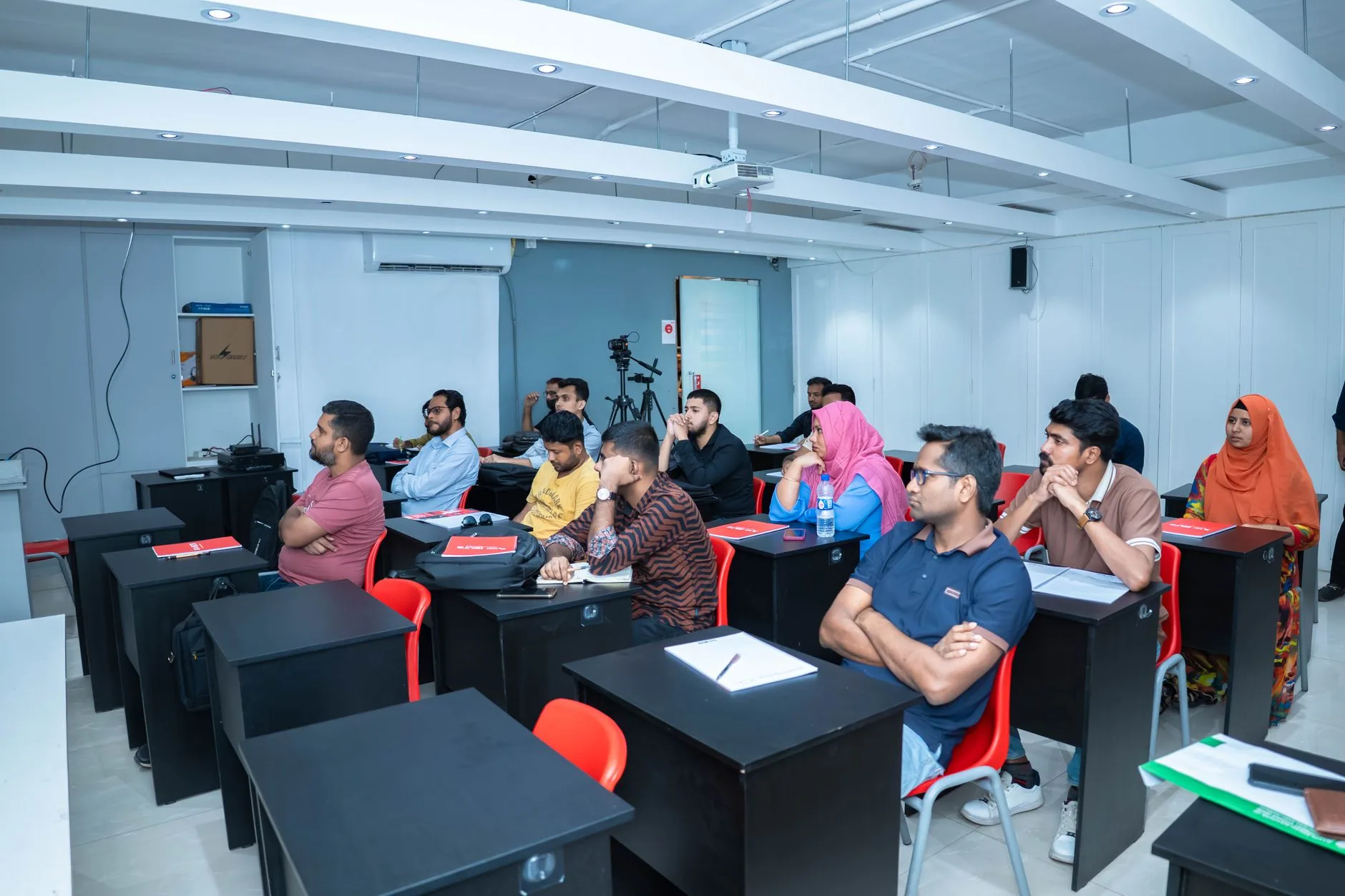

Free Student Training
AAPSCM® Free Supply Chain Management & Logistics Career Development Program for U.S. College Students
Build Industry-Ready Skills. Explore Global Supply Chains. Prepare for Tomorrow's Careers.
The American Association of Procurement, Supply Chain and Tourism Management (AAPSCM®) is offering a free Supply Chain Management (SCM) training initiative designed to introduce college and university students across the United States to the knowledge, professional competencies, and practical applications of modern supply chain management.
Free Student Training
Introducing the Free Supply Chain Management Student Training Initiative
Connecting Academic Knowledge with Real-World Business Operations
AAPSCM® recognizes the importance of introducing students to professional disciplines that contribute to organizational performance and global economic activity.
Supply chain management is an interdisciplinary field that coordinates purchasing, production, inventory, warehousing, transportation, distribution, information, and customer fulfillment.
The AAPSCM® Free Supply Chain Management Training initiative helps students understand how these activities work together and how supply chain professionals contribute to business efficiency, resilience, and customer satisfaction.
The program introduces foundational concepts through structured learning topics, professional examples, and practical business scenarios.
Our Program Objectives
The initiative seeks to:
- Introduce students to the principles and functions of supply chain management.
Explain how supply chains connect suppliers, manufacturers, distributors, retailers, and customers.
Develop foundational knowledge of logistics and transportation operations.
Introduce inventory management and demand forecasting concepts.
Explain the role of procurement and supplier relationships in supply chain performance.
Build awareness of digital technologies, artificial intelligence, and supply chain analytics.
Introduce sustainability and responsible supply chain practices.
Strengthen analytical thinking and business problem-solving skills.
Encourage exploration of supply chain and logistics career pathways.
Support early professional development through practical learning activities.
No previous professional experience in supply chain management is required.
Overview
Why Should College Students Learn Supply Chain Management?
Understand the Systems That Keep the Global Economy Moving
Supply chain management influences how organizations obtain materials, manufacture products, store inventory, transport goods, and deliver services.
Businesses rely on supply chain professionals to coordinate these activities and respond to operational challenges.
Understanding supply chain management can help students develop a broader perspective on how organizations function and how business decisions affect suppliers, customers, and global markets.
Gain Practical Business Knowledge
Learn how products and materials move through supply networks, from suppliers to final customers.
Explore Diverse Career Opportunities
Discover professional roles in logistics, inventory management, procurement, operations, distribution, and supply chain analysis.
Develop Analytical Thinking
Explore how organizations evaluate inventory levels, transportation alternatives, supplier performance, and customer demand.
Understand Global Business Operations
Learn how international sourcing, transportation networks, and distribution systems support global commerce.
Discover Emerging Technologies
Gain introductory knowledge of artificial intelligence, Internet of Things (IoT), analytics, automation, and digital supply chain systems.
Strengthen Your Resume
Demonstrate initiative by completing professional development training that complements your college education.
Learn Responsible Business Practices
Understand the importance of sustainability, ethical sourcing, waste reduction, and environmental considerations in supply chain decisions.
Prepare for Continued Professional Development
Build foundational knowledge that can support future coursework, internships, professional training, and certification preparation.
Curriculum
What Will You Learn?
Six Core Learning Modules in Supply Chain Management
The training introduces six major areas of supply chain management, combining essential concepts with practical examples and introductory problem-solving activities.
Foundations of Supply Chain Management
Understanding How Global Supply Chains Operate
This module introduces the structure, functions, and importance of supply chain management.
Topics Covered
- Introduction to supply chain management.
- Supply chain participants and stakeholders.
- Suppliers, manufacturers, distributors, retailers, and customers.
- Material, information, and financial flows.
- Supply chain planning and coordination.
- Relationship between procurement, logistics, and operations.
- Supply chain performance objectives.
- Introduction to supply chain risk.
- Global supply chain challenges.
- Role of supply chain professionals.
Practical Learning Activity: Map a Product's Supply Chain
Students select a familiar product, such as a smartphone, laptop, food product, or automobile component, and develop a simple supply chain map identifying suppliers, manufacturers, distribution channels, and customers.
Expected Learning Outcome
Explain the structure of a basic supply chain and describe how its participants and activities are connected.
Logistics and Transportation Management
Moving Products Efficiently from Origin to Destination
Logistics involves the planning and coordination of product movement, storage, and delivery.
This module introduces the principles of transportation and distribution management.
Topics Covered
- Fundamentals of logistics management.
- Transportation modes: road, rail, air, and maritime.
- Freight movement and distribution.
- Transportation planning.
- Route selection and delivery scheduling.
- Last-mile delivery.
- Warehousing and distribution centers.
- Transportation cost considerations.
- Delivery performance.
- Logistics risks and disruptions.
- Introduction to global transportation networks.
Practical Learning Activity: Choose the Best Transportation Method
Students compare transportation options for a fictional shipment using delivery time, cost, distance, and product requirements.
Expected Learning Outcome
Compare common transportation methods and explain factors that influence logistics decisions.
Inventory Management and Demand Forecasting
Balancing Product Availability, Inventory Costs, and Customer Demand
Inventory management helps organizations maintain appropriate stock levels while considering customer demand and operating costs.
This module introduces inventory control and basic demand forecasting methods.
Topics Covered
- Introduction to inventory management.
- Types of inventory.
- Inventory carrying costs.
- Stockouts and overstocking.
- Inventory turnover.
- Safety stock concepts.
- Reorder points.
- Demand forecasting fundamentals.
- Seasonal demand.
- Basic inventory performance indicators.
- Introduction to warehouse inventory systems.
Practical Learning Activity: Inventory Planning Challenge
Students review a fictional retailer's sales and inventory information and recommend when additional stock should be ordered.
Expected Learning Outcome
Explain basic inventory control concepts and use introductory demand information to support replenishment decisions.
Procurement and Supplier Relationship Management
Understanding How Organizations Source and Manage Suppliers
Procurement and supplier management are essential components of effective supply chain operations.
This module introduces supplier selection, sourcing decisions, purchasing activities, and supplier performance.
Topics Covered
- Procurement fundamentals.
- Purchasing and strategic sourcing.
- Supplier identification.
- Supplier evaluation.
- Requests for Quotation (RFQ).
- Supplier selection criteria.
- Purchase orders.
- Contract management fundamentals.
- Supplier performance measurement.
- Supplier relationship management.
- Procurement risk.
- Ethical sourcing.
Practical Learning Activity: Supplier Selection Exercise
Students compare three fictional suppliers based on price, quality, delivery reliability, and service performance.
Expected Learning Outcome
Apply basic supplier evaluation criteria to support an informed purchasing recommendation.
Digital Technologies, AI, and Supply Chain Analytics
Exploring the Technologies Transforming Modern Supply Chains
Digital technologies support organizations in monitoring supply chain activities, analyzing information, and improving operational decisions.
This module introduces technology concepts relevant to supply chain management.
Topics Covered
- Digital supply chain fundamentals.
- Enterprise Resource Planning (ERP) systems.
- Warehouse Management Systems (WMS).
- Transportation Management Systems (TMS).
- Supply chain dashboards.
- Data analytics.
- Artificial intelligence in supply chain management.
- Predictive demand forecasting.
- Internet of Things (IoT).
- Automation and robotics.
- Blockchain concepts.
- Cybersecurity awareness in supply chains.
Practical Learning Activity: Digital Supply Chain Improvement Scenario
Students examine a fictional supply chain process and identify opportunities where digital tools could improve visibility, forecasting, or operational coordination.
Expected Learning Outcome
Describe how digital technologies and analytics can support supply chain planning, monitoring, and decision-making.
Sustainable and Resilient Supply Chain Management
Building Responsible and Adaptable Supply Networks
Organizations increasingly consider environmental impacts, responsible sourcing, operational disruptions, and long-term resilience when managing supply chains.
This module introduces sustainability and risk awareness.
Topics Covered
- Sustainable supply chain principles.
- Environmental considerations in logistics.
- Responsible sourcing.
- Ethical supplier practices.
- Waste reduction.
- Packaging and transportation efficiency.
- Circular supply chain concepts.
- Supply chain risk identification.
- Supplier disruptions.
- Business continuity awareness.
- Supply chain resilience.
- Introduction to relevant sustainability frameworks.
Practical Learning Activity: Sustainable Supply Chain Challenge
Students review a fictional organization's distribution process and recommend changes that could reduce waste, improve transportation efficiency, or strengthen supply continuity.
Expected Learning Outcome
Identify sustainability and resilience considerations relevant to supply chain operations.
Practical Learning and Real-World Supply Chain Activities
Learn Through Business Scenarios, Analysis, and Problem-Solving
The program emphasizes practical understanding through activities that reflect common supply chain decisions.
Depending on the course delivery arrangements, participants may complete exercises such as:
- Supply Chain Mapping
Trace the movement of a product from raw materials through manufacturing and distribution to the final customer.
Logistics Planning
Compare transportation options and recommend an appropriate delivery method.
Inventory Management
Review stock information and identify basic replenishment requirements.
Demand Forecasting
Use historical demand information to estimate future inventory needs.
Supplier Evaluation
Compare suppliers using price, delivery, quality, and reliability criteria.
Digital Supply Chain Analysis
Identify how technology can support supply chain visibility and operational decision-making.
Sustainability Assessment
Recommend responsible practices for reducing waste and improving supply chain efficiency.
Risk and Resilience Scenario
Identify potential disruptions and suggest practical mitigation measures.
These activities are intended to introduce professional concepts rather than substitute for advanced technical training or workplace experience.
Learning Outcomes: What Skills Will You Develop?
Build a Strong Foundation for Further Study and Professional Growth
Upon successful completion of the applicable program requirements, students should be able to:
- Explain the fundamental concepts and functions of supply chain management.
- Identify the major participants and processes within a supply chain.
- Describe the relationship between procurement, inventory, logistics, and distribution.
- Compare common transportation methods and logistics considerations.
- Explain basic inventory management and demand forecasting concepts.
- Apply introductory supplier evaluation techniques.
- Recognize the role of technology in supply chain operations.
- Describe applications of AI, IoT, automation, and analytics in supply chains.
- Identify environmental and ethical considerations in supply chain decisions.
- Recognize common supply chain risks and basic resilience strategies.
- Interpret simple supply chain information to support operational decisions.
- Communicate introductory supply chain recommendations through practical learning exercises.
Program Features and Student Benefits
Accessible Learning Designed for College Students
100% Free Training
Eligible U.S. college students can participate in the training initiative without a training fee.
Flexible Online Access
The program is designed for online learning, allowing students to participate according to the applicable training schedule and access arrangements.
Foundational Professional Curriculum
Learn important supply chain concepts without needing previous professional experience.
Industry-Relevant Topics
Explore logistics, procurement, inventory, forecasting, sustainability, and digital technologies.
Practical Case Studies
Apply concepts through examples and business scenarios.
Professional Instruction
The initiative offers learning opportunities supported by experienced supply chain and logistics professionals.
Certificate of Completion
Participants who satisfy the applicable training requirements may receive an AAPSCM® certificate of completion.
Career Exploration
Learn about potential career pathways in logistics, operations, procurement, inventory management, and supply chain analysis.
Who Is Eligible for the Free Training?
An Opportunity for U.S. College and University Students Across Academic Disciplines
The initiative is intended for students currently attending colleges or universities in the United States.
Students do not need to major in supply chain management to benefit from the training.
Suitable Academic Disciplines
- Supply Chain Management.
- Logistics and Transportation.
- Business Administration.
- Operations Management.
- Engineering.
- Information Systems.
- Computer Science.
- Accounting and Finance.
- Healthcare Administration.
- International Business.
- Economics.
- Retail Management.
- Hospitality and Tourism.
- Public Administration.
- Other academic disciplines.
- Recommended Student Requirements
- Applicants should:
- Be enrolled at a U.S. college or university.
- Have an interest in professional development.
- Possess basic computer and internet skills.
- Have access to a suitable device and internet connection.
- Complete the application process.
- Follow the applicable training instructions.
- Participate in required learning activities and assessments.
- No previous supply chain management experience is required.
Flexible Learning for Busy College Students
Professional Development That Complements Your Academic Schedule
AAPSCM® recognizes that college students often balance classes, assignments, employment, internships, and personal responsibilities.
The free training initiative emphasizes flexible online learning.
Self-Paced Online Learning
Where available, self-paced learning allows participants to study course materials and complete learning activities according to the applicable access arrangements.
Potential Features
- Online learning resources.
- Independent study.
- Flexible scheduling.
- Structured learning modules.
- Case-based activities.
- Applicable knowledge assessments.
- Instructor-Supported Learning
Where scheduled instructor-led sessions are offered, participants may benefit from explanations, discussions, and guided learning activities.
Potential Features
- Live online instruction.
- Opportunities to ask questions.
- Structured learning sessions.
- Instructor explanations.
- Guided activities.
- Professional discussion.
Training format, duration, access period, and enrollment schedule are provided in your enrollment instructions.
Earn an AAPSCM® Certificate of Completion
Recognize Your Commitment to Professional Learning
Students who successfully satisfy the applicable training requirements may receive an AAPSCM® Certificate of Completion in Supply Chain Management.
The certificate acknowledges completion of the designated student training program.
How to Present Your Achievement
Resume
List the program under Professional Development or Relevant Training.
Include the completed training in the appropriate course or certification section using the exact title provided on the certificate.
Internship Applications
Describe the knowledge and activities completed during the program.
Professional Portfolio
Document relevant learning exercises and practical assignments, where permitted.
Career Development
Use the training as a foundation for additional supply chain education and professional development.
Course Completion Versus Professional Certification
A certificate of completion confirms that the participant has satisfied the requirements of the training course.
It is not automatically equivalent to the American Certified Supply Chain Professional (ACSCP)® or another AAPSCM® professional certification.
Professional certification requires satisfaction of separate program eligibility, examination, and credentialing requirements.
Careers
Explore Supply Chain and Logistics Career Pathways
Discover Professional Opportunities Across Industries
Supply chain management knowledge is relevant to organizations that purchase, manufacture, transport, store, distribute, or sell products and services.
The following roles illustrate career areas students may explore through further study, internships, and entry-level employment.
| Career Pathway | Typical Responsibilities |
|---|---|
| Supply Chain Assistant | Supporting supply chain coordination and documentation |
| Logistics Coordinator | Assisting with shipment planning and transportation activities |
| Inventory Control Assistant | Monitoring inventory records and stock movements |
| Procurement Assistant | Supporting purchasing and supplier communications |
| Purchasing Coordinator | Coordinating purchase orders and purchasing activities |
| Supply Chain Analyst | Reviewing operational data and supply chain performance |
| Transportation Coordinator | Supporting shipment scheduling and delivery tracking |
| Warehouse Operations Assistant | Assisting with storage, inventory, and warehouse processes |
| Demand Planning Assistant | Supporting demand analysis and forecasting activities |
| Supplier Relationship Coordinator | Assisting with supplier performance and communications |
| Distribution Coordinator | Supporting product distribution and order fulfillment |
| Operations Assistant | Supporting operational planning and process coordination |
Industries Where Supply Chain Skills Are Relevant
- Manufacturing.
- Retail and E-Commerce.
- Transportation and Logistics.
- Healthcare.
- Technology.
- Food and Agriculture.
- Construction.
- Government.
- Hospitality and Tourism.
- Energy.
- Consumer Goods.
- International Trade.
Career opportunities and hiring requirements vary by employer and location. Completion of the training does not guarantee employment.
How Supply Chain Management Connects with Emerging Technologies
Prepare to Understand the Future of Global Operations
Modern supply chains increasingly use technology to improve visibility, planning, communication, and operational coordination.
Students entering the workforce can benefit from understanding these developments.
Artificial Intelligence
AI applications may support demand forecasting, inventory analysis, supplier risk monitoring, and operational planning.
Internet of Things
Connected devices and sensors may provide information about shipment locations, equipment conditions, and inventory movement.
Data Analytics
Organizations use data to monitor performance, identify trends, and evaluate operational decisions.
Warehouse Automation
Automated systems and robotics can support selected warehousing, sorting, and materials-handling activities.
Digital Supply Chain Platforms
Integrated information systems help organizations coordinate purchasing, inventory, transportation, and distribution.
Blockchain
Blockchain-based approaches may support selected traceability, recordkeeping, and information-sharing applications.
Cybersecurity
Supply chain professionals increasingly need awareness of cyber risks affecting suppliers, digital systems, and operational continuity.
This introductory training provides foundational awareness of these technologies rather than advanced technical specialization.
Supply Chain Sustainability and Global Responsibility
Understand the Environmental and Social Dimensions of Supply Chain Decisions
Supply chain management is not limited to cost, speed, and product availability.
Organizations must also consider the environmental, ethical, and operational consequences of sourcing, transportation, production, and distribution.
Sustainable Transportation
Explore approaches to transportation planning that consider fuel use, delivery efficiency, and environmental impacts.
Responsible Sourcing
Understand the importance of supplier ethics, responsible purchasing, and appropriate supplier evaluation.
Waste Reduction
Learn how inventory planning, packaging decisions, and operational practices may influence waste.
Circular Supply Chains
Explore introductory concepts related to reuse, repair, recycling, and resource recovery.
Supply Chain Resilience
Recognize the importance of preparing for disruptions, supplier failures, transportation delays, and other operational risks.
International Standards Awareness
Gain introductory exposure to relevant frameworks such as ISO 20400 sustainable procurement guidance and ISO 28000 security management requirements.
Participation in training does not constitute ISO certification or guarantee regulatory compliance.
How to Apply for the Free Supply Chain Management Training
Start Your Professional Learning Journey in Five Simple Steps
Visit the Application Page
Open the official AAPSCM® student training application form.
Complete Your Student Information
Provide the requested personal, academic, and contact details.
Submit Your Application
Review the information and submit the completed application.
Receive Enrollment Instructions
Follow the training information provided by AAPSCM® regarding access, scheduling, or other applicable enrollment requirements.
Complete the Training
Participate in the assigned learning activities and satisfy the requirements for course completion.
Opportunities for Colleges, Universities, and Student Organizations
Supporting Student Career Readiness Through Professional Learning
The free training initiative may provide an additional professional development opportunity for colleges, universities, academic departments, student associations, and career development offices.
Academic Departments
Faculty members may share the training opportunity with students interested in logistics, procurement, operations, and supply chain management.
Career Development Offices
Career services personnel may introduce students to the program as a supplementary learning opportunity.
Student Organizations
Business, technology, engineering, and supply chain student associations may share the official application information with their members.
Internship Preparation
Students may use the training to develop introductory knowledge relevant to supply chain and logistics internships.
Professional Development Programs
Academic institutions may identify the training as an optional extracurricular professional learning activity.
Suitable University Programs
- Business and Management.
- Supply Chain and Logistics.
- Engineering.
- Information Systems.
- Operations Management.
- Healthcare Administration.
- International Business.
- Economics.
- Public Administration.
- Hospitality and Tourism.
Academic credit is not automatically awarded. Any recognition toward degree requirements must be determined independently by the student's college or university.
Continuing Your Professional Development with AAPSCM®
From Introductory Training to Specialized Professional Learning
Completing introductory supply chain training can provide a foundation for further study and professional development.
Students interested in advancing their knowledge may explore additional courses and certification preparation opportunities.
Professional Learning Areas
- Supply Chain Management.
- Logistics and Transportation.
- Inventory Management.
- Procurement and Strategic Sourcing.
- Supply Chain Analytics.
- Digital Supply Chain Technologies.
- Artificial Intelligence.
- Sustainable Supply Chain Management.
- Supply Chain Cybersecurity.
- Supply Chain Risk and Resilience.
- Selected AAPSCM® Professional Certification Pathways
- American Certified Supply Chain Professional (ACSCP)®
- Focuses on foundational and applied supply chain management competencies.
- Chartered Supply Chain Manager (CSCM)®
- Addresses strategic supply chain management and related managerial competencies.
- American Certified Global Supply Chain Risk and Resilience Professional (AC-GSRP)®
- Addresses supply chain risk, disruption, and resilience concepts.
- Chartered Sustainable Supply Chain Manager (CSSCM)®
- Focuses on sustainability considerations in supply chain management.
- American Certified Supply Chain Cybersecurity Professional (AC-SCCP)®
- Addresses cybersecurity-related risks and practices relevant to supply chains.
Professional certification programs have separate eligibility, examination, registration, and fee requirements.
Questions
Frequently Asked Questions
Everything Students Need to Know About the Free SCM Training
Is the Supply Chain Management training completely free?
The program is free for eligible U.S. college and university students.
Who is eligible to apply?
The initiative is intended for students attending colleges or universities in the United States.
Do I need to major in supply chain management?
No. The program is intended for students from different academic disciplines.
Do I need previous supply chain experience?
No. The training introduces foundational concepts and is suitable for beginners.
Is the program offered online?
Yes. The original program description identifies flexible online learning as a key feature.
Can I complete the training at my own pace?
Yes. Self-paced learning is a program feature. Access and completion arrangements are provided during enrollment.
How long does the training take?
Duration depends on the learning format and your pace. Please consult your enrollment instructions for the schedule and expected study commitment.
What topics are covered?
The curriculum addresses supply chain fundamentals, logistics, inventory, forecasting, procurement, digital technologies, and sustainability.
Will I complete practical activities?
The program describes interactive case studies and practical examples. The specific activities depend on the delivery arrangements.
Will I receive a certificate?
The program offers a certificate of completion for participants who successfully satisfy its requirements.
Can I include the certificate on my resume?
Yes. Students may accurately describe their completed training and the relevant knowledge developed.
Is the certificate equivalent to a professional certification?
No. A training completion certificate is different from an AAPSCM® professional certification credential.
Does the training guarantee a job or internship?
No. The training supports professional development but does not guarantee employment.
Is AAPSCM® membership required?
No. Membership is not required to participate in the training.
Can graduate students apply?
The program is open to eligible U.S. college students. Please contact AAPSCM® to confirm eligibility for graduate students.
Can international students studying at U.S. colleges apply?
The original page does not clarify whether eligibility depends on institution location, citizenship, or residency. Applicants should contact AAPSCM® for guidance.
Do I need special software?
Basic computer and internet access are expected. Any additional technical requirements should be communicated in the training instructions.
Can students from community colleges apply?
The program is open to eligible U.S. college students. Specific institution eligibility is confirmed through the application process.
Can my university share this training opportunity?
Yes. Academic departments, faculty members, and student services offices may share the official program information.
Does the training award university credit?
No automatic academic credit is stated. Any academic recognition must be approved by the student's institution.
Can I pursue professional certification after completing the training?
Yes, students may explore available certification pathways, subject to the applicable eligibility and examination requirements.
How do I apply?
Complete the official online student training application form.
Get Started
Your Future in Global Supply Chain Management Starts Here
Learn Today. Develop Professional Skills. Explore Tomorrow's Opportunities.
The global movement of goods, services, materials, and information depends on effective supply chain management.
From procurement and inventory planning to transportation, distribution, analytics, and sustainability, supply chain professionals contribute to the operations of organizations across numerous industries.
The AAPSCM® Free Supply Chain Management & Logistics Career Development Program provides eligible U.S. college and university students with an opportunity to develop foundational knowledge, explore practical business scenarios, and begin building professional competencies.
Whether your goal is to pursue a career in logistics, become a supply chain analyst, work in procurement, explore international trade, or strengthen your understanding of global business operations, this training offers an accessible starting point.
Take Advantage of This Free Professional Development Opportunity
100% Free Training for Eligible U.S. College Students
Flexible Online Learning
Practical Supply Chain Knowledge
Certificate of Completion
Contact AAPSCM®
Questions About the Free Supply Chain Management Training?
For information about student eligibility, applications, training access, and program arrangements, contact:
- American Association of Procurement, Supply Chain and Tourism Management (AAPSCM®)
- Email: [email protected]
- Administration: [email protected]
Start Developing Your Career Skills Today
Build Industry-Ready Skills. Explore Global Supply Chains. Prepare for Tomorrow's Careers.