Lead Intelligent, Resilient, and Sustainable Supply Chains with Artificial Intelligence.

1. Program Overview

The Chartered Supply Chain Artificial Intelligence Manager (CSAI-M)® is AAPSCM®'s advanced, management-level certification for professionals who lead the design, implementation, and governance of AI-enabled supply chain initiatives.

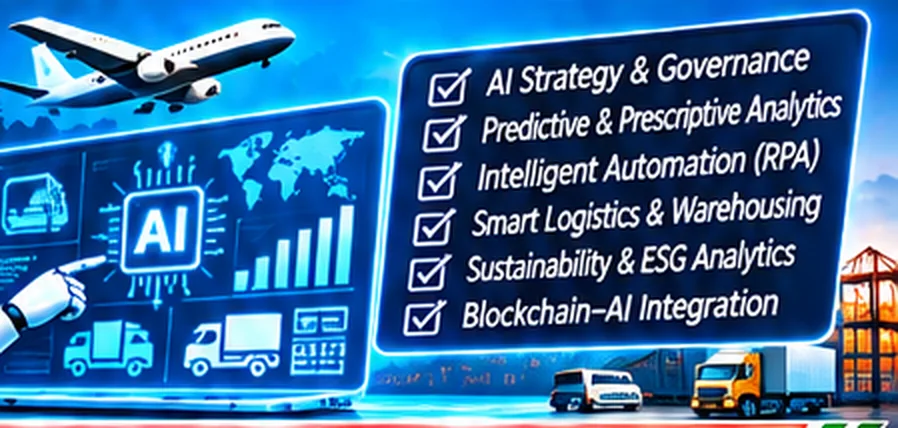
  • Develop and execute AI strategies aligned with business goals.
  • Apply predictive and prescriptive analytics for better decisions.
  • Implement intelligent automation (RPA) to improve efficiency.
  • Integrate blockchain and AI for transparency and traceability.
  • Drive sustainability and ESG performance with AI insights.
  • Lead digital transformation, manage risk, and ensure responsible AI governance.

Program at a Glance

Certification TitleChartered Supply Chain Artificial Intelligence Manager
DesignationCSAI-M®
Awarding OrganizationAAPSCM®
Certification LevelAdvanced (Management)
Curriculum8 Comprehensive Modules
Learning ApproachExecutive, case-based, and application-focused
Virtual Instructor-Led Training4 days, 2 hours daily (8 live hours)
Self-Paced LearningFlexible, independent study with preparation resources
Assessment Options (Virtual Instructor-Led)Choice of Certification Exam or Applied Capstone Project
Assessment (Self-Paced)Certification Exam Only (100 MCQs)
Certification Validity3 years (renewable per AAPSCM® policy)
Virtual Training Fee$1,200 USD
Self-Paced Fee (Exam Only)$399.99 USD
International ParticipationOpen to qualified global applicants
Predictive Analytics

Use ML and analytics for forecasting, optimization, and risk mitigation.

Career Advancement

Position yourself for senior roles in AI, supply chain, and digital transformation.

Program Video

3. Certification Learning Outcomes

Upon successful completion, you will be able to:

  • Design and implement AI-enabled supply chain strategies.
  • Use predictive and prescriptive analytics for planning and optimization.
  • Evaluate and implement intelligent automation (RPA) initiatives.
  • Integrate blockchain and AI for secure and transparent supply networks.
  • Establish responsible AI governance, privacy, and cybersecurity controls.
  • Apply AI for sustainability and ESG performance.
  • Lead organizational change and AI adoption across global operations.
  • Develop data-driven solutions to improve supply chain resilience.

A Strategic, Management-Level Curriculum

Module 1Intelligent Automation & RPA in Supply Chains
Module 2Customer Intelligence, Demand Sensing & Responsiveness
Module 3Executive AI Strategy & Digital Transformation
Module 4Legal, Ethical, Cybersecurity & Responsible AI Governance
Module 5Predictive Analytics & Cognitive Decision Intelligence
Module 6AI-Driven Logistics, Smart Warehousing & Autonomous Systems
Module 7AI for Sustainable Supply Chains, ESG & Circular Economy
Module 8Blockchain–AI Integration for Secure & Transparent Supply Networks
Training OptionDurationAssessmentFee
Virtual Instructor-Led (Online)4 Days (2 Hours Daily) 8 Live HoursChoice of: • Certification Exam (100 MCQs, 90 Minutes), or • Applied Capstone Project$1,200 USD
Self-Paced Learning (Exam Only)Flexible (Independent Study)Certification Exam Only (100 MCQs, 90 Minutes) Passing Score: 70%$399.99 USD

6. Career Pathways & Professional Roles

  • Chief Supply Chain Officer
  • Supply Chain AI Transformation Director
  • Digital Supply Chain Director
  • AI & Automation Program Manager
  • Supply Chain Analytics Manager
  • Procurement AI Strategy Manager
  • Intelligent Logistics Manager
  • Sustainability & ESG Supply Chain Manager
  • Blockchain & Supply Chain Consultant
  • Operations Transformation Manager

7. Certification Progression Pathway

Level 1CSAI®
(Analyst)
Foundational AI and supply chain analytics.
➜
Level 2AC-SCAIP®
(Professional)
Applied AI expertise in supply chain operations.
➜
Level 3CSAI-M®
(Manager)
Strategic AI leadership, transformation, and governance.
ISO 9001 Quality Management
ISO/IEC 27001 Information Security
ISO 31000 Risk Management
ISO 37301 Compliance Management
ISO/IEC 42001 AI Management Systems
ISO/IEC 17024 Personnel Certification
UN SDGs (9, 12, 13) Sustainable Supply Chains
AI Strategy & Transformation
Demand Forecasting
Process Automation (RPA)
Blockchain & Traceability
Sustainability & ESG
AI Governance & Risk
Decision Intelligence
Enroll Today »

Advance Your Career in AI-Enabled Supply Chain Management with AAPSCM®

Choose Your Pathway and Enroll

More about CSAI-M®

The complete program information, in one place. Swipe sideways or use the arrows to browse each topic.

1
Program Overview

Advancing Supply Chain Leadership Through Artificial Intelligence, Intelligent Automation, and Strategic Digital Transformation

Artificial intelligence is fundamentally changing how organizations plan, manage, optimize, and govern global supply chains. Traditional supply chain management approaches, often characterized by fragmented information systems, manual processes, reactive decision-making, and limited end-to-end visibility, are increasingly being supplemented by intelligent technologies capable of identifying patterns, predicting disruptions, evaluating alternatives, and supporting complex operational decisions.

Across manufacturing, healthcare, energy, retail, transportation, government, and international trade, organizations are investing in artificial intelligence (AI), machine learning (ML), generative AI, predictive analytics, intelligent automation, robotics, and digital supply chain platforms to improve operational performance and organizational resilience.

However, the successful adoption of these technologies requires more than technical knowledge. Organizations need experienced managers who can evaluate AI investment opportunities, align digital transformation with business objectives, oversee implementation, manage technology-related risks, establish governance structures, and lead multidisciplinary teams.

The Chartered Supply Chain Artificial Intelligence Manager (CSAI-M)® is AAPSCM®'s advanced management-level professional certification designed for experienced supply chain professionals, procurement managers, logistics leaders, operations executives, digital transformation specialists, and qualified AI practitioners seeking to lead intelligent supply chain initiatives.

The certification develops advanced competencies in AI strategy, predictive and prescriptive analytics, intelligent automation, demand intelligence, smart logistics, digital supply chain integration, responsible AI governance, sustainability, and organizational transformation.

CSAI-M® emphasizes the management and strategic application of artificial intelligence rather than programming expertise alone.

Participants learn how to evaluate emerging technologies, develop implementation roadmaps, assess business cases, establish performance indicators, manage organizational change, and translate AI-enabled insights into operational and strategic value.

The curriculum incorporates relevant concepts from international standards and professional frameworks, including ISO/IEC 42001, ISO/IEC 27001, ISO 31000, ISO 9001, ISO 37301, and responsible AI governance principles.

Through management scenarios, applied case studies, executive decision-making exercises, technology evaluation activities, and practical assessment opportunities, the program prepares qualified professionals to manage AI-enabled supply chain transformation initiatives responsibly and effectively.

CSAI-M® bridges the gap between technical AI capabilities and executive supply chain leadership, preparing professionals to make informed technology decisions, manage implementation risks, and create measurable organizational value.

2
Why Artificial Intelligence Leadership Matters in Modern Supply Chains

From Traditional Supply Chain Management to Intelligent, Predictive, and Resilient Operations

Global supply chains are becoming increasingly interconnected, data-intensive, and vulnerable to disruptions. Managers must respond to changing customer demand, supplier performance variability, transportation constraints, geopolitical developments, cybersecurity risks, regulatory requirements, and sustainability expectations.

Artificial intelligence provides opportunities to improve the speed, quality, and consistency of operational decisions, but its effectiveness depends on appropriate data, implementation controls, human oversight, and organizational readiness.

2.1 Increasing Global Supply Chain Complexity

Supply chain managers coordinate activities across suppliers, production facilities, warehouses, logistics providers, distribution channels, and customers.

AI-enabled systems can help managers identify operational dependencies, analyze large datasets, and evaluate potential disruptions across these interconnected activities.

2.2 Demand for Predictive Decision-Making

Traditional reporting often focuses on historical performance.

Predictive analytics can help managers anticipate changes in demand, supplier capacity, inventory requirements, transportation conditions, and operational risks.

2.3 Pressure to Improve Operational Efficiency

Organizations seek to reduce unnecessary operating costs, improve resource utilization, minimize delays, and strengthen service reliability.

Intelligent automation can support routine workflows, document processing, exception identification, and operational monitoring.

2.4 Need for Greater Supply Chain Visibility

Fragmented information systems can limit management's understanding of end-to-end supply chain performance.

AI-supported analytics and integrated digital platforms can improve visibility across procurement, inventory, transportation, production, and supplier operations.

2.5 Growing Cybersecurity and Data Governance Requirements

As supply chains become more digitally connected, organizations must address data security, third-party technology risks, access controls, system reliability, and responsible AI practices.

2.6 Sustainability and Responsible Sourcing

Organizations increasingly monitor environmental impacts, supplier practices, energy consumption, resource efficiency, and relevant sustainability requirements.

AI-enabled analytics can support measurement, monitoring, and more informed sustainability decisions.

2.7 Workforce Transformation

AI adoption changes how employees perform analytical, administrative, planning, and management activities.

Effective managers must develop workforce capabilities, address employee concerns, redesign workflows, and establish appropriate human oversight.

2.8 Strategic Competitive Advantage

Organizations that implement AI effectively may improve forecasting, operational responsiveness, customer service, resource allocation, and risk management.

CSAI-M® develops the management competencies needed to evaluate these opportunities and oversee responsible implementation.

3
Why Choose the CSAI-M® Certification?

Advanced Professional Development for AI-Enabled Supply Chain Managers

Strategic AI Leadership

Develop the ability to align artificial intelligence initiatives with organizational objectives, supply chain priorities, and long-term business strategy.

Executive Decision Intelligence

Understand how predictive analytics, prescriptive modeling, scenario analysis, and management dashboards support informed decisions.

Intelligent Automation Management

Evaluate robotic process automation, intelligent process automation, workflow orchestration, and AI-assisted operational systems.

Digital Supply Chain Transformation

Learn to develop implementation roadmaps, assess organizational readiness, establish technology governance, and coordinate transformation programs.

Advanced Risk Management

Strengthen knowledge of supply chain resilience, predictive risk identification, cybersecurity, supplier risk monitoring, and continuity planning.

Responsible AI Governance

Understand the management responsibilities associated with AI transparency, accountability, fairness, privacy, data protection, and human oversight.

Sustainability and ESG Intelligence

Explore how AI-enabled analytics can support emissions monitoring, responsible sourcing, resource optimization, and sustainability reporting.

Career and Leadership Development

Build competencies relevant to senior management positions involving supply chain strategy, procurement transformation, logistics innovation, AI implementation, and operations leadership.

4
Why Earn CSAI-M® Through AAPSCM®?

A Management-Level Credential Connecting AI Technology With Supply Chain Leadership

AAPSCM® develops professional education and certification programs across procurement, supply chain management, tourism, and emerging business technologies.

CSAI-M® provides a structured pathway for experienced professionals seeking to advance from operational and analytical AI applications into management-level responsibilities.

Specialized Supply Chain AI Curriculum

The program addresses AI applications in procurement, inventory, logistics, transportation, warehousing, supplier management, sustainability, and global operations.

Advanced Management Perspective

The curriculum emphasizes investment evaluation, strategic planning, technology governance, organizational transformation, and performance management.

Flexible Professional Learning

Candidates may pursue independent examination preparation, virtual instructor-led training, or customized corporate executive learning arrangements.

Practical Business Applications

Learning activities examine realistic management challenges involving demand volatility, supplier risk, automation investment, digital transformation, and supply chain resilience.

Responsible Technology Adoption

The program emphasizes information security, ethical AI practices, data governance, accountability, and appropriate human oversight.

Professional Credential Verification

Successful candidates receive certification documentation subject to AAPSCM® issuance and verification procedures.

Continuing Professional Development

Certification holders are encouraged to maintain current knowledge through continuing education, industry participation, and ongoing professional learning.

5
Who Should Enroll?

Designed for Experienced Professionals and Emerging AI Transformation Leaders

CSAI-M® is intended for individuals with management responsibilities, relevant leadership experience, or prior professional certification in supply chain artificial intelligence.

Supply Chain Managers and Directors

Professionals responsible for supply chain planning, performance, strategy, operations, and transformation.

Procurement and Strategic Sourcing Managers

Managers overseeing supplier intelligence, sourcing optimization, procurement analytics, and digital procurement initiatives.

Logistics and Transportation Leaders

Professionals responsible for logistics networks, transportation planning, distribution operations, and digital logistics transformation.

Operations and Manufacturing Managers

Managers overseeing production planning, operational efficiency, resource allocation, and intelligent manufacturing initiatives.

Digital Transformation Managers

Professionals responsible for implementing technology-enabled improvements across enterprise operations.

AI and Business Analytics Managers

Individuals managing analytical systems, decision-support applications, data teams, and AI-enabled business initiatives.

Enterprise Risk and Compliance Managers

Professionals overseeing operational risk, regulatory compliance, technology governance, and business continuity.

Supply Chain Consultants

Consultants advising organizations on intelligent supply chain strategy, AI implementation, process optimization, and technology adoption.

Technology and Automation Program Managers

Professionals managing RPA, AI integration, ERP modernization, workflow automation, and enterprise technology projects.

Qualified Professional-Level Certification Holders

Candidates who have completed the American Certified Supply Chain Artificial Intelligence Professional (AC-SCAIP®) and seek progression to management-level certification.

6
Eligibility and Admission Requirements

An Advanced Credential for Management-Level Competence

CSAI-M® is not intended to serve as an introductory certification for individuals without relevant professional preparation.

Candidates should demonstrate appropriate management experience, leadership responsibilities, or prior certification in supply chain artificial intelligence.

Pathway A — Professional Certification Progression

Candidates who have earned the American Certified Supply Chain Artificial Intelligence Professional (AC-SCAIP®) may apply for CSAI-M® in accordance with AAPSCM® eligibility and assessment requirements.

This pathway recognizes prior professional-level knowledge in supply chain AI applications.

Pathway B — Management or Leadership Experience

Candidates currently serving in relevant supply chain, procurement, logistics, operations, technology, analytics, or digital transformation management positions may qualify based on documented professional experience.

Pathway C — Equivalent Professional Qualifications

Applicants with substantial relevant experience, professional education, or comparable AI and supply chain management qualifications may request an eligibility review.

Acceptance through this pathway is subject to AAPSCM® approval.

Recommended Prior Knowledge

Candidates should be familiar with:

  • Supply chain management principles
  • Procurement and supplier management
  • Logistics and inventory management
  • Business analytics and performance indicators
  • Artificial intelligence fundamentals
  • Organizational strategy and management
  • Digital transformation concepts
  • Risk management and governance

Important Eligibility Requirement: Candidates must satisfy the applicable management experience or professional certification criteria before attempting CSAI-M® assessment. Completion of introductory training alone does not automatically establish eligibility.

7
Comprehensive Certification Learning Outcomes

Upon successful completion of the CSAI-M® program, candidates should be able to demonstrate advanced management-level competencies in the following areas.

7.1 Strategic AI Integration

  • Evaluate organizational opportunities for AI adoption.
  • Develop AI-enabled supply chain transformation strategies.
  • Align AI initiatives with corporate objectives.
  • Establish measurable transformation goals.
  • Evaluate technology investments and implementation priorities.

7.2 Predictive and Prescriptive Analytics

  • Interpret AI-enabled demand forecasting information.
  • Evaluate predictive risk models.
  • Apply scenario analysis to management decisions.
  • Understand optimization approaches.
  • Assess analytical model limitations.

7.3 Intelligent Automation Management

  • Identify suitable automation opportunities.
  • Evaluate RPA and intelligent automation solutions.
  • Develop automation implementation plans.
  • Establish performance measurement systems.
  • Assess operational and financial benefits.

7.4 Digital Supply Chain Architecture

  • Evaluate integrated enterprise information systems.
  • Understand ERP, WMS, TMS, and supplier platform integration.
  • Assess data interoperability.
  • Identify digital supply chain visibility requirements.
  • Evaluate technology architecture risks.

7.5 Responsible AI Governance

  • Establish organizational AI governance requirements.
  • Evaluate data protection and cybersecurity risks.
  • Recognize AI bias and reliability concerns.
  • Define human oversight responsibilities.
  • Support responsible AI procurement and deployment.

7.6 Sustainability and ESG Analytics

  • Identify AI applications in environmental monitoring.
  • Evaluate responsible sourcing information.
  • Interpret sustainability performance indicators.
  • Understand circular economy applications.
  • Support evidence-based sustainability decisions.

7.7 Organizational Leadership

  • Lead multidisciplinary transformation teams.
  • Develop workforce AI literacy initiatives.
  • Manage organizational resistance.
  • Establish stakeholder communication plans.
  • Monitor technology adoption and business outcomes.

7.8 Global Supply Chain Risk Intelligence

  • Evaluate supplier and logistics risks.
  • Interpret predictive disruption indicators.
  • Develop resilience strategies.
  • Understand international compliance considerations.
  • Support business continuity planning.
8
Advanced Certification Curriculum — Eight Comprehensive Modules

Module 1: Intelligent Automation, RPA, and AI-Enabled Supply Chain Operations

Module Objective: Develop management-level knowledge of robotic process automation, intelligent process automation, and enterprise workflow transformation.

1.1 Foundations of Intelligent Automation

  • Evolution of enterprise automation
  • Robotic process automation
  • Intelligent process automation
  • AI-assisted workflow systems
  • Hyperautomation concepts
  • Human-in-the-loop automation

1.2 Automation Opportunities Across Supply Chains

  • Procurement request processing
  • Purchase order management
  • Supplier onboarding
  • Invoice processing
  • Inventory monitoring
  • Logistics documentation
  • Operational reporting

1.3 RPA and Enterprise Integration

  • ERP integration
  • Workflow automation
  • Document processing
  • API-based integration
  • Exception handling
  • System interoperability

1.4 AI-Enabled Automation

  • Intelligent document processing
  • Machine learning-assisted classification
  • Generative AI workflow support
  • Automated exception identification
  • AI-assisted decision support

1.5 Automation Business Cases

  • Cost-benefit analysis
  • Return on investment
  • Total cost of ownership
  • Implementation risks
  • Process suitability
  • Automation prioritization

1.6 Automation Governance

  • Access controls
  • Process accountability
  • Audit trails
  • Operational resilience
  • Human approvals
  • Performance monitoring

Management Case Study: A multinational organization wants to automate supplier onboarding, purchase order validation, and invoice reconciliation.

Participants evaluate automation opportunities, implementation requirements, business risks, and expected performance indicators.

Expected Competency: Develop an automation implementation proposal supported by operational and financial considerations.

Module 2: AI-Enabled Customer Intelligence, Demand Sensing, and Supply Chain Responsiveness

Module Objective: Strengthen managerial understanding of customer intelligence, demand sensing, predictive planning, and AI-enabled supply chain responsiveness.

2.1 Customer Intelligence in Supply Chains

  • Customer behavior analysis
  • Customer demand patterns
  • Order history interpretation
  • Service expectations
  • Customer segmentation

2.2 Demand Sensing Technologies

  • Short-term demand indicators
  • Real-time sales information
  • Market signals
  • Demand variability
  • External data sources
  • Demand sensing limitations

2.3 AI Demand Forecasting

  • Time-series forecasting
  • Machine learning applications
  • Forecast accuracy measurement
  • Demand pattern identification
  • Forecast bias
  • Model validation

2.4 Inventory and Supply Alignment

  • Demand-driven inventory planning
  • Replenishment decisions
  • Safety stock considerations
  • Capacity planning
  • Supplier coordination

2.5 Generative AI and Customer Engagement

  • AI-assisted customer communication
  • Customer inquiry support
  • Knowledge retrieval
  • Automated service workflows
  • Human oversight

2.6 Managerial Performance Indicators

  • Forecast accuracy
  • Inventory turnover
  • Customer service levels
  • Order fulfillment performance
  • Stockout frequency
  • Demand planning efficiency

Management Case Study: A retail distribution company experiences fluctuating demand, excess inventory in some regions, and recurring stockouts in others.

Participants evaluate forecasting information and recommend an AI-enabled demand planning strategy.

Expected Competency: Interpret demand intelligence and recommend improvements to forecasting, inventory, and customer service performance.

Module 3: Executive AI Strategy, Investment Planning, and Supply Chain Digital Transformation

Module Objective: Equip managers with the strategic planning and organizational leadership capabilities required to direct AI-enabled supply chain transformation.

3.1 AI Strategy and Corporate Alignment

  • Corporate strategic objectives
  • Supply chain transformation priorities
  • AI opportunity identification
  • Business value creation
  • Technology investment alignment

3.2 Organizational AI Readiness

  • Data maturity
  • Technology infrastructure
  • Workforce capabilities
  • Leadership commitment
  • Governance readiness
  • Organizational culture

3.3 AI Investment Evaluation

  • Business case development
  • Financial justification
  • Return on investment
  • Total cost of ownership
  • Investment risk assessment
  • Vendor evaluation

3.4 Digital Transformation Roadmaps

  • Transformation vision
  • Implementation phases
  • Technology priorities
  • Pilot projects
  • Scaling strategies
  • Continuous improvement

3.5 Organizational Change Management

  • Stakeholder analysis
  • Workforce engagement
  • Communication planning
  • Resistance management
  • Training requirements
  • Adoption monitoring

3.6 Executive Performance Governance

  • Strategic KPIs
  • Transformation scorecards
  • Management dashboards
  • Benefits realization
  • Accountability structures
  • Executive reporting

Management Case Study: A manufacturing enterprise plans to introduce AI forecasting, automated procurement workflows, and intelligent logistics systems.

Participants prepare a phased transformation roadmap and executive investment proposal.

Expected Competency: Develop an AI transformation strategy aligned with organizational priorities and measurable business outcomes.

Module 4: Legal, Ethical, Cybersecurity, and Responsible AI Governance

Module Objective: Develop management competencies for governing AI systems responsibly and managing legal, operational, ethical, and cybersecurity risks.

4.1 Foundations of AI Governance

  • Responsible AI principles
  • Organizational accountability
  • AI oversight structures
  • Policy development
  • Model lifecycle governance
  • Documentation requirements

4.2 Ethical AI Management

  • Algorithmic fairness
  • Bias identification
  • Transparency
  • Explainability
  • Human oversight
  • Responsible automated decision-making

4.3 Data Governance

  • Data quality
  • Data ownership
  • Data classification
  • Data access
  • Data retention
  • Cross-border data considerations

4.4 Cybersecurity in Intelligent Supply Chains

  • Connected system vulnerabilities
  • Third-party technology risks
  • Identity and access management
  • Cybersecurity controls
  • Incident response
  • Business continuity

4.5 Legal and Regulatory Considerations

  • Data privacy obligations
  • Contractual responsibilities
  • AI vendor agreements
  • Intellectual property considerations
  • International regulatory developments
  • Sector-specific compliance

4.6 International Standards and Frameworks

  • ISO/IEC 42001
  • ISO/IEC 27001
  • ISO 31000
  • ISO 37301
  • NIST AI Risk Management Framework
  • Relevant privacy requirements

4.7 AI Governance Implementation

  • Governance committees
  • Risk registers
  • AI system inventories
  • Control monitoring
  • Internal reviews
  • Management reporting

Management Case Study: An organization introduces AI-powered supplier risk scoring but discovers inconsistent data, potential bias, and limited explanation of automated recommendations.

Participants develop a governance response and recommend appropriate controls.

Expected Competency: Evaluate AI governance risks and recommend organizational safeguards.

Module 5: Predictive Analytics, Prescriptive Optimization, and Cognitive Supply Chain Decision Intelligence

Module Objective: Develop advanced management knowledge of AI-supported forecasting, optimization, scenario analysis, and decision intelligence.

5.1 Advanced Supply Chain Analytics

  • Descriptive analytics
  • Diagnostic analytics
  • Predictive analytics
  • Prescriptive analytics
  • Decision intelligence

5.2 Machine Learning Applications

  • Supervised learning
  • Unsupervised learning
  • Forecasting applications
  • Classification
  • Anomaly detection
  • Model performance evaluation

5.3 Predictive Supply Chain Models

  • Demand forecasting
  • Inventory requirements
  • Supplier performance
  • Transportation delays
  • Operational risk indicators
  • Capacity utilization

5.4 Prescriptive Optimization

  • Inventory optimization
  • Transportation planning
  • Resource allocation
  • Supplier selection
  • Production scheduling
  • Scenario evaluation

5.5 Decision Intelligence Dashboards

  • Executive KPI dashboards
  • Operational performance monitoring
  • Exception reporting
  • Predictive alerts
  • Scenario visualization
  • Management recommendations

5.6 Analytical Model Governance

  • Data quality
  • Model validation
  • Forecast error
  • Model drift
  • Interpretability
  • Human review

Management Case Study: A global distributor must balance transportation costs, inventory availability, warehouse capacity, and customer service requirements.

Participants evaluate alternative operational scenarios using AI-supported analytical information.

Expected Competency: Interpret predictive and prescriptive analytics and recommend defensible management decisions.

Module 6: AI-Driven Logistics, Smart Warehousing, and Autonomous Supply Chain Systems

Module Objective: Evaluate intelligent logistics technologies, smart warehouse systems, and emerging autonomous supply chain applications.

6.1 Intelligent Logistics Management

  • Digital logistics transformation
  • Transportation management systems
  • Logistics visibility
  • Predictive transportation analytics
  • Shipment monitoring
  • Logistics performance indicators

6.2 AI Route Optimization

  • Route planning
  • Delivery scheduling
  • Transportation cost analysis
  • Traffic and disruption considerations
  • Fleet utilization
  • Service-level performance

6.3 Smart Warehousing

  • Warehouse management systems
  • Automated storage and retrieval
  • Robotics applications
  • Inventory visibility
  • Picking and fulfillment optimization
  • Warehouse productivity

6.4 Computer Vision and Robotics

  • Visual inventory recognition
  • Quality inspection
  • Warehouse safety monitoring
  • Robotics coordination
  • Operational limitations

6.5 Predictive Maintenance

  • Equipment condition monitoring
  • Failure prediction
  • Maintenance scheduling
  • Asset utilization
  • Downtime reduction

6.6 Autonomous Delivery Technologies

  • Autonomous mobile robots
  • Automated guided vehicles
  • Drone delivery concepts
  • Autonomous transportation
  • Regulatory and safety considerations

6.7 Technology Investment and Governance

  • Capital investment
  • Operational feasibility
  • Safety controls
  • Cybersecurity
  • Workforce implications
  • Return on investment

Management Case Study: A regional distribution network seeks to modernize warehouse operations and improve delivery reliability.

Participants evaluate smart warehouse technologies and recommend an implementation approach.

Expected Competency: Assess intelligent logistics technologies and develop management recommendations for operational modernization.

Module 7: AI for Sustainable Supply Chains, ESG Intelligence, and Circular Economy Management

Module Objective: Develop managerial competencies in applying AI-enabled analytics to sustainability, responsible sourcing, environmental performance, and resource optimization.

7.1 Sustainable Supply Chain Management

  • Environmental sustainability
  • Responsible sourcing
  • Resource efficiency
  • Supply chain transparency
  • Sustainable procurement

7.2 AI-Enabled Environmental Analytics

  • Energy consumption monitoring
  • Emissions estimation
  • Transportation efficiency
  • Waste identification
  • Environmental performance dashboards

7.3 ESG Data and Reporting

  • Environmental indicators
  • Social responsibility indicators
  • Governance indicators
  • Data quality
  • Reporting limitations
  • Evidence verification

7.4 Responsible Supplier Management

  • Supplier sustainability assessments
  • Ethical sourcing
  • Labor-related risk indicators
  • Supplier compliance monitoring
  • Corrective action management

7.5 Circular Economy Applications

  • Product lifecycle analysis
  • Reverse logistics
  • Recycling and reuse
  • Resource recovery
  • Waste reduction
  • Circular supply chain models

7.6 Sustainability Governance

  • Management accountability
  • Sustainability targets
  • Supplier engagement
  • Performance monitoring
  • Responsible claims
  • Continuous improvement

Management Case Study: A manufacturing company seeks to improve supplier sustainability monitoring and reduce logistics-related environmental impacts.

Participants develop an AI-enabled sustainability monitoring proposal with appropriate performance indicators.

Expected Competency: Evaluate how AI-supported analytics can strengthen sustainable supply chain management.

Module 8: Blockchain–AI Integration, Digital Traceability, and Secure Supply Networks

Module Objective: Develop management-level understanding of blockchain and AI integration, supply chain traceability, smart contracts, and digital trust.

8.1 Blockchain Fundamentals

  • Distributed ledger concepts
  • Permissioned blockchain
  • Transaction validation
  • Data integrity
  • Consensus mechanisms
  • Blockchain limitations

8.2 Blockchain in Supply Chains

  • Product traceability
  • Shipment documentation
  • Supplier verification
  • Provenance tracking
  • Transaction records
  • Audit support

8.3 Smart Contracts

  • Smart contract fundamentals
  • Automated business rules
  • Procurement workflow applications
  • Contract execution conditions
  • Legal considerations
  • Human oversight

8.4 AI and Blockchain Convergence

  • AI-assisted transaction analysis
  • Blockchain-based record verification
  • Supplier intelligence
  • Risk monitoring
  • Traceability analytics
  • Data interoperability

8.5 Security and Governance

  • Access management
  • Data privacy
  • Smart contract vulnerabilities
  • Third-party dependencies
  • System governance
  • Auditability

8.6 Enterprise Implementation

  • Business case evaluation
  • Technology architecture
  • Partner participation
  • Integration costs
  • Operational scalability
  • Performance measurement

Management Case Study: An international food supply chain seeks improved product traceability, supplier documentation, and disruption monitoring.

Participants evaluate a proposed blockchain–AI solution and identify implementation risks, costs, and governance requirements.

Expected Competency: Assess blockchain–AI applications and recommend appropriate approaches for secure supply chain information management.

9
AAPSCM® Intelligent Supply Chain AI Management Framework

Eight Strategic Pillars of AI-Enabled Supply Chain Leadership

The proposed AAPSCM® Intelligent Supply Chain AI Management Framework organizes CSAI-M® management competencies into eight strategic pillars.

Pillar 1 — Strategic AI Leadership

Align AI initiatives with corporate strategy, operational objectives, and measurable business outcomes.

Pillar 2 — Predictive Decision Intelligence

Use forecasting, analytics, scenario modeling, and optimization to support management decisions.

Pillar 3 — Intelligent Automation

Identify, prioritize, implement, and govern automation opportunities across supply chain operations.

Pillar 4 — Digital Supply Chain Integration

Coordinate enterprise platforms, operational data, technology systems, and end-to-end visibility.

Pillar 5 — Responsible AI Governance

Establish accountability, cybersecurity controls, ethical practices, and human oversight.

Pillar 6 — Supply Chain Resilience

Apply predictive intelligence to identify risks, evaluate disruptions, and strengthen business continuity.

Pillar 7 — Sustainability and ESG Intelligence

Use relevant analytical tools to support responsible sourcing, environmental monitoring, and resource efficiency.

Pillar 8 — Organizational Transformation

Lead workforce development, stakeholder engagement, technology adoption, and continuous improvement.

Framework Application

Organizations can use these pillars to evaluate management capabilities, identify technology investment priorities, develop leadership training programs, and guide responsible AI transformation.

10
AI Supply Chain Management Maturity Model

Five Levels of Organizational AI Development

LevelMaturity StageCharacteristics
Level 1Traditional OperationsManual workflows, fragmented data, reactive decision-making
Level 2Digitally Enabled OperationsERP systems, digital reporting, basic workflow automation
Level 3Data-Driven Supply ChainsIntegrated dashboards, structured analytics, predictive reporting
Level 4AI-Enabled Supply ChainsPredictive forecasting, intelligent automation, optimization, AI governance
Level 5Intelligent and Adaptive Supply NetworksIntegrated decision intelligence, advanced automation, continuous optimization, human-supervised adaptive systems

Management Applications

CSAI-M® candidates learn to evaluate organizational AI maturity and identify appropriate development priorities.

Maturity assessments may examine:

  • Data readiness
  • Technology infrastructure
  • Workforce competencies
  • Process standardization
  • AI governance
  • Supply chain integration
  • Operational performance
  • Organizational leadership

The maturity model serves as a management planning and self-assessment tool rather than a formal third-party accreditation or maturity certification.

11
CSAI-M® Body of Knowledge

Advanced Management-Level Knowledge Domains

DomainKnowledge AreaManagement Focus
1Intelligent Automation and RPAAutomation strategy, governance, and business value
2Customer Intelligence and Demand SensingDemand forecasting, customer analytics, and responsiveness
3Executive AI StrategyInvestment planning, transformation roadmaps, and leadership
4Responsible AI GovernanceEthics, cybersecurity, compliance, and accountability
5Predictive and Prescriptive AnalyticsDecision intelligence, forecasting, and optimization
6Intelligent LogisticsSmart warehousing, transportation, and autonomous systems
7Sustainability and ESG AnalyticsResponsible sourcing, emissions, and circular economy
8Blockchain–AI IntegrationTraceability, smart contracts, and digital trust

The Body of Knowledge provides a structured foundation for professional preparation and certification assessment.

12
International Standards and Professional Frameworks

CSAI-M® incorporates management concepts relevant to international standards and professional guidance.

ISO/IEC 42001 — Artificial Intelligence Management Systems

Supports understanding of organizational AI governance, accountability, management systems, and responsible AI deployment.

ISO/IEC 27001 — Information Security Management Systems

Supports information security awareness, risk management, and protection of organizational information.

ISO 9001 — Quality Management Systems

Supports process management, quality improvement, performance monitoring, and organizational effectiveness.

ISO 31000 — Risk Management Guidelines

Supports structured risk identification, assessment, treatment, and monitoring.

ISO 37301 — Compliance Management Systems

Supports organizational compliance management, accountability, and governance.

ISO/IEC 17024 — Conformity Assessment: General Requirements for Bodies Operating Certification of Persons

Provides relevant principles for personnel certification schemes, including impartiality, assessment integrity, and certification management.

NIST Artificial Intelligence Risk Management Framework

Provides guidance relevant to identifying, evaluating, and managing AI-related risks.

United Nations Sustainable Development Goals

Relevant themes include:

  • SDG 9 — Industry, Innovation, and Infrastructure
  • SDG 12 — Responsible Consumption and Production
  • SDG 13 — Climate Action

Standards Clarification: Curriculum alignment does not establish independent accreditation or endorsement. References to ISO/IEC 17024 do not imply that the CSAI-M® certification scheme has been accredited under that standard.

13
Certification Examination and Assessment Requirements

Demonstrate Advanced AI Management Competence

The CSAI-M® assessment evaluates candidates' ability to interpret AI-enabled supply chain information, evaluate management scenarios, assess technology opportunities, and make appropriate strategic decisions.

Examination Structure

  • Format: 100 Multiple-Choice Questions
  • Duration: 90 Minutes
  • Minimum Passing Score: 70%
  • Minimum Correct Answers: 70
  • Delivery: Online Proctored Examination
  • Certification Level: Advanced Management
  • Certification Validity: Three Years
  • Retake: One retake, subject to AAPSCM® eligibility, scheduling, and retake policies

Recommended Examination Blueprint

Knowledge DomainQuestionsWeight
Intelligent Automation and RPA1212%
Customer Intelligence and Demand Sensing1010%
Executive AI Strategy and Transformation1818%
Responsible AI Governance1515%
Predictive and Prescriptive Analytics1515%
Intelligent Logistics and Warehousing1010%
Sustainability and ESG Intelligence1010%
Blockchain–AI Integration1010%
Total100100%

The blueprint is recommended for formal assessment approval.

Assessment Emphasis

The examination focuses on management judgment and applied understanding rather than programming syntax alone.

Candidates may be required to:

  • Evaluate AI investment proposals.
  • Interpret analytical dashboards.
  • Identify appropriate automation opportunities.
  • Recommend governance controls.
  • Assess technology implementation risks.
  • Evaluate supply chain disruption scenarios.
  • Interpret sustainability indicators.
  • Select appropriate digital transformation strategies.
14
Applied Executive Capstone Project

Developing an Enterprise AI Supply Chain Transformation Strategy

Eligible virtual instructor-led participants may complete an approved applied capstone project as an alternative to the certification examination.

Capstone Objective

Demonstrate the ability to evaluate organizational AI readiness, identify transformation opportunities, develop a management-level implementation strategy, and establish appropriate governance and performance controls.

Business Scenario

A multinational manufacturing and distribution organization operates across several geographic markets.

The organization experiences:

  • Inconsistent demand forecasts
  • Supplier delivery variability
  • Limited end-to-end visibility
  • Manual procurement workflows
  • Transportation delays
  • Fragmented operational data
  • Increasing cybersecurity concerns
  • Pressure to improve sustainability performance

Executive leadership wants to develop an AI-enabled supply chain transformation program.

Required Capstone Components

Part 1 — Executive Situation Analysis

Assess organizational challenges, current processes, and strategic objectives.

Part 2 — AI Maturity Assessment

Evaluate data readiness, technology capabilities, workforce skills, and governance maturity.

Part 3 — AI Opportunity Identification

Identify suitable AI applications in forecasting, procurement, logistics, automation, and risk management.

Part 4 — Technology Evaluation

Compare proposed technologies based on feasibility, integration requirements, cost, and business value.

Part 5 — Strategic Transformation Roadmap

Develop phased implementation priorities, milestones, and management responsibilities.

Part 6 — Financial and Operational Evaluation

Prepare a business case addressing expected benefits, costs, risks, and performance indicators.

Part 7 — Responsible AI Governance

Develop policies and controls addressing security, privacy, accountability, fairness, and human oversight.

Part 8 — Workforce and Change Management

Prepare an organizational adoption strategy, including training and stakeholder communication.

Part 9 — Sustainability and Risk Management

Identify relevant sustainability indicators, supplier risks, and resilience considerations.

Part 10 — Executive Presentation

Present recommendations and defend the proposed strategy before the designated assessment panel.

Required Deliverables

  • Executive summary
  • Organizational assessment
  • AI maturity analysis
  • Technology evaluation
  • Transformation roadmap
  • Financial justification
  • Governance framework
  • Risk assessment
  • Workforce development plan
  • Performance dashboard proposal
  • Executive presentation

Recommended Capstone Evaluation Rubric

Assessment CriteriaWeight
Strategic Situation Analysis10%
AI Maturity and Readiness Assessment10%
AI Technology Evaluation15%
Transformation Strategy15%
Financial and Operational Justification10%
Responsible AI Governance15%
Risk and Sustainability Integration10%
Workforce and Change Management5%
Executive Presentation and Defense10%
Total100%

Recommended Minimum Passing Score: 70%.

Capstone eligibility, approval, submission deadlines, and evaluation procedures are subject to AAPSCM® assessment policies.

15
Training Delivery Options, Duration, and Fees

AAPSCM® provides flexible professional development options for qualified CSAI-M® candidates.

Option 1 — Self-Paced Certification Examination

Program Fee: $399.99 USD

Intended Participants

Experienced managers and qualified professionals who prefer independent examination preparation.

Included

  • Certification examination registration
  • Complimentary examination preparation guide
  • Complimentary practice questions
  • Applicable examination preparation resources
  • Certification assessment processing

Preparation Period

Recommended independent preparation: six to eight weeks, depending on prior professional knowledge.

Assessment

Certification examination only.

Self-paced candidates must complete and pass the CSAI-M® certification examination.

The capstone pathway is not available as a substitute for the self-paced examination.

Self-Paced Registration:https://aapscm.org/checkout?add-to-cart=45217

Option 2 — Virtual Instructor-Led Executive Training

Program Fee: $1,200 USD

Duration

Four days of live online training.

Daily Instruction: Two HoursTotal Live Instruction: Eight Hours

Learning Experience

  • Executive-level AI strategy discussions
  • Supply chain management case studies
  • AI governance applications
  • Predictive analytics demonstrations
  • Intelligent automation scenarios
  • Digital transformation planning
  • Instructor-guided management exercises

Assessment Options

Eligible participants may select:

  • Certification examination — 100 multiple-choice questions, 90 minutes, 70% passing score.
  • Approved executive capstone project — organizational AI supply chain transformation strategy.

Both assessment pathways are subject to applicable AAPSCM® policies.

Option 3 — Corporate Executive Cohort

Program Fee: Customized Quotation

Designed for organizations seeking structured AI leadership development for management teams.

Available Program Features

  • Customized training schedule
  • Corporate AI readiness assessment
  • Industry-specific case studies
  • Executive workshops
  • Supply chain AI strategy exercises
  • Organizational transformation planning
  • Group learning activities
  • Corporate assessment arrangements

Suitable Organizations

  • Manufacturing companies
  • Logistics providers
  • Procurement organizations
  • Healthcare supply chains
  • Energy companies
  • Retail and distribution enterprises
  • Government agencies
  • Consulting firms

Corporate Training Contact: [email protected]

Training Fee Comparison

Training PathwayDurationFeeAssessment
Self-PacedFlexible preparation$399.99Examination only
Virtual Instructor-Led4 days × 2 hours$1,200Examination or approved capstone
Corporate Executive CohortCustomizedBy quotationBased on approved arrangement
16
Official Certification Progression Pathway

From Supply Chain AI Analysis to Professional Practice and Strategic Management

AAPSCM® provides a structured three-level professional development pathway for supply chain artificial intelligence.

Level 1 — Analyst

Chartered Supply Chain Artificial Intelligence Analyst (CSAI)®

Focus: Foundational AI analytics and supply chain intelligence.

This level introduces the fundamental concepts, technologies, and analytical applications of artificial intelligence in supply chain management.

Core competencies include:

  • AI fundamentals
  • Machine learning concepts
  • Supply chain data analytics
  • Demand forecasting
  • Inventory analysis
  • Procurement intelligence
  • Logistics analytics
  • Responsible AI awareness

Professional Outcome: Develop foundational analytical knowledge relevant to AI-enabled supply chain operations.

Level 2 — Professional

American Certified Supply Chain Artificial Intelligence Professional (AC-SCAIP®)

Focus: Applied AI technologies and professional implementation competencies.

This level builds on foundational knowledge and emphasizes the practical application of artificial intelligence to supply chain business processes.

Core competencies include:

  • AI-supported supply chain optimization
  • Predictive analytics applications
  • Intelligent procurement
  • Digital workflow automation
  • Supplier intelligence
  • Supply chain performance analysis
  • AI implementation considerations
  • Operational risk management

Professional Outcome: Develop applied competencies for supporting and implementing AI-enabled supply chain improvements.

Level 3 — Manager

Chartered Supply Chain Artificial Intelligence Manager (CSAI-M®)

Focus: Strategic AI leadership, enterprise transformation, and responsible technology governance.

This advanced level emphasizes the managerial responsibilities associated with AI investment, enterprise implementation, operational performance, governance, and organizational transformation.

Core competencies include:

  • Executive AI strategy
  • AI investment evaluation
  • Digital transformation leadership
  • Predictive decision intelligence
  • Intelligent automation management
  • Responsible AI governance
  • Sustainability intelligence
  • Enterprise risk management
  • Workforce transformation

Professional Outcome: Demonstrate advanced knowledge relevant to managing AI-enabled supply chain transformation initiatives.

Official Progression

CSAI® (Analyst) → AC-SCAIP® (Professional) → CSAI-M® (Manager)

Progression and Eligibility

The three-level pathway supports structured professional development.

However, experienced managers and qualified leaders may be eligible to apply directly for CSAI-M® through an approved experience-based route.

Progression does not automatically guarantee admission, examination eligibility, or certification award.

17
Career Pathways and Professional Opportunities

CSAI-M® supports professional development relevant to senior management, supply chain technology, analytics, and organizational transformation.

Chief Supply Chain Officer

Oversees enterprise supply chain strategy, performance, transformation, and organizational leadership.

Supply Chain AI Transformation Director

Leads AI-enabled modernization programs and coordinates enterprise technology initiatives.

Digital Supply Chain Director

Oversees digital supply chain systems, technology integration, and operational transformation.

AI and Automation Program Manager

Manages automation projects, implementation schedules, governance, and business performance.

Supply Chain Analytics Manager

Leads analytics initiatives supporting forecasting, operational intelligence, and management decisions.

Intelligent Logistics Manager

Oversees AI-enabled logistics optimization, smart warehousing, and transportation modernization.

Procurement AI Strategy Manager

Develops and manages AI applications in sourcing, supplier intelligence, procurement operations, and contract processes.

Enterprise AI Governance Manager

Coordinates responsible AI policies, technology risk management, accountability, and oversight.

Supply Chain Risk and Resilience Manager

Uses analytical information to evaluate disruptions, supplier risks, and business continuity requirements.

Blockchain and Supply Chain Technology Consultant

Advises organizations on traceability, digital trust, technology integration, and AI-enabled supply chain applications.

Operations Transformation Manager

Leads organizational improvement programs involving digital technologies, analytics, and automation.

Sustainability and Supply Chain Intelligence Manager

Supports sustainability analytics, responsible sourcing, resource optimization, and relevant reporting activities.

Career Note: CSAI-M® supports professional development but does not guarantee employment, promotion, salary increases, or qualification for positions requiring additional credentials or experience.

18
Industry Applications of CSAI-M®

Manufacturing

AI-supported production planning, supplier intelligence, predictive maintenance, and operational optimization.

Healthcare and Pharmaceuticals

Inventory management, medical supply forecasting, supplier risk monitoring, and distribution visibility.

Energy and Oil and Gas

Equipment logistics, procurement intelligence, asset maintenance, supply chain resilience, and operational risk monitoring.

Retail and E-Commerce

Demand forecasting, inventory optimization, fulfillment planning, and distribution analytics.

Transportation and Logistics

Route optimization, shipment monitoring, fleet analytics, and smart warehouse operations.

Government and Public Procurement

Procurement analytics, compliance monitoring, process automation, and accountable technology governance.

Defense and Aerospace

Supply chain risk intelligence, supplier visibility, inventory planning, and operational continuity.

Agriculture and Food Supply Chains

Demand planning, product traceability, logistics coordination, and food supply chain monitoring.

Construction and Infrastructure

Materials forecasting, supplier performance, procurement planning, and project logistics.

Consulting and Professional Services

AI readiness assessments, transformation planning, governance advisory services, and implementation evaluation.

19
Certification Award, Validity, and Professional Verification

Official Professional Designation

Upon successful completion of all applicable eligibility, assessment, and administrative requirements, qualified candidates are awarded:

Chartered Supply Chain Artificial Intelligence Manager (CSAI-M)®

Awarding Organization

American Association of Procurement, Supply Chain & Tourism Management (AAPSCM®)

Certification Documentation

Eligible successful candidates may receive:

  • Official digital certification
  • Applicable digital credential or badge
  • Certification identification information
  • Credential verification through AAPSCM® procedures
  • Optional physical credential documentation where available

Certification Validity

Three years from the official date of issuance.

Renewal and Continuing Professional Development

Certification holders are expected to maintain relevant professional knowledge and satisfy applicable renewal requirements.

Relevant continuing professional development areas include:

  • AI governance
  • Supply chain analytics
  • Intelligent automation
  • Cybersecurity
  • Digital transformation
  • Procurement technology
  • Supply chain risk management
  • Sustainability
  • Leadership development

Renewal requirements and fees are governed by the applicable AAPSCM® certification policies.

20
Frequently Asked Questions

1. What is CSAI-M®?

CSAI-M® is an advanced management-level professional certification focused on strategic AI leadership, intelligent supply chain transformation, predictive analytics, automation, and responsible AI governance.

2. Who awards CSAI-M®?

The American Association of Procurement, Supply Chain & Tourism Management (AAPSCM®).

3. Is CSAI-M® an introductory certification?

No. It is designed for qualified managers, leaders, and professionals with relevant experience or prior supply chain AI certification.

4. What is the official certification progression?

CSAI® (Analyst) → AC-SCAIP® (Professional) → CSAI-M® (Manager).

5. Must candidates complete all three levels?

Not necessarily. Qualified managers may be considered for direct entry based on applicable eligibility requirements.

6. What is the self-paced examination fee?

$399.99 USD.

7. What is the virtual instructor-led training fee?

$1,200 USD.

8. How long is virtual training?

Four days, with two hours of live instruction each day.

9. How many modules are included?

Eight advanced professional modules.

10. What is the examination format?

100 multiple-choice questions.

11. How long is the examination?

90 minutes.

12. What is the passing score?

70%.

13. Can self-paced candidates complete a capstone instead of an examination?

No. The self-paced pathway requires the certification examination.

14. Can virtual instructor-led candidates choose a capstone?

Yes, where the approved training and assessment arrangements permit that option.

15. Does the program require programming knowledge?

Advanced programming is not the primary focus. Candidates should possess appropriate AI literacy and management-level analytical understanding.

16. Does CSAI-M® cover generative AI?

Yes. Generative AI applications are addressed within intelligent automation, customer engagement, decision support, and enterprise governance.

17. Does the program cover AI cybersecurity?

Yes. Module 4 addresses cybersecurity, data protection, responsible AI, and governance.

18. Does the program include sustainability?

Yes. Module 7 focuses on sustainable supply chains, ESG intelligence, and circular economy applications.

19. Is corporate training available?

Yes. Customized corporate executive cohorts may be arranged.

20. How long is the certification valid?

Three years.

21. Does the certification guarantee an executive position?

No. It develops relevant competencies but does not guarantee employment or promotion.

22. Is the certification independently ISO/IEC 17024 accredited?

Curriculum alignment with ISO/IEC 17024 does not establish accreditation. Any independent accreditation claim must be supported by current accreditation documentation.

21
How to Enroll

Begin Your Journey Toward Advanced Supply Chain AI Leadership

Step 1 — Review Eligibility

Confirm that you satisfy the relevant management experience or professional certification requirements.

Step 2 — Select Your Training Pathway

Choose self-paced examination preparation, virtual instructor-led training, or an approved corporate executive cohort.

Step 3 — Complete Registration

Submit the required enrollment information.

Step 4 — Pay the Applicable Fee

Complete payment for your selected training pathway.

Step 5 — Prepare for Assessment

Review the eight advanced knowledge modules and applicable professional learning resources.

Step 6 — Complete the Required Assessment

Self-paced candidates must complete the certification examination.

Eligible virtual instructor-led candidates may select the examination or an approved executive capstone project.

Step 7 — Receive Your Credential

Successful candidates who satisfy all certification requirements become eligible for the CSAI-M® professional designation.

22
Enroll Today — Lead the Future of Intelligent Supply Chains

Lead with Intelligence. Transform with Strategy. Govern with Integrity.

The next generation of supply chain leadership requires professionals who understand both operational management and the strategic application of emerging technologies.

Artificial intelligence offers opportunities to improve forecasting, strengthen operational visibility, automate repetitive processes, manage risk, and support more informed decisions.

However, technology alone does not create sustainable business value.

Successful transformation requires managers who can evaluate investment opportunities, lead implementation programs, establish appropriate governance, develop workforce capabilities, and align innovation with organizational objectives.

The Chartered Supply Chain Artificial Intelligence Manager (CSAI-M)® prepares qualified professionals to address these responsibilities through advanced management-focused professional development.

Whether you lead procurement, logistics, operations, supply chain planning, digital transformation, analytics, or enterprise technology programs, CSAI-M® provides a structured pathway for strengthening your understanding of AI-enabled supply chain leadership.

Registration Options

Self-Paced Examination — $399.99 USD

https://aapscm.org/checkout?add-to-cart=45217

Virtual Instructor-Led Executive Training — $1,200 USD

Contact AAPSCM® for the current training registration link and available cohort dates.

Corporate Executive Training

[email protected]

General Inquiries

[email protected]

Telephone

+1 (803) 998-2189

Website

https://www.aapscm.org

Developed and Awarded by AAPSCM®

CSAI-M® — Strategic Intelligence. Responsible Innovation. Transformational Supply Chain Leadership.

1 / 22Swipe or use the arrows →