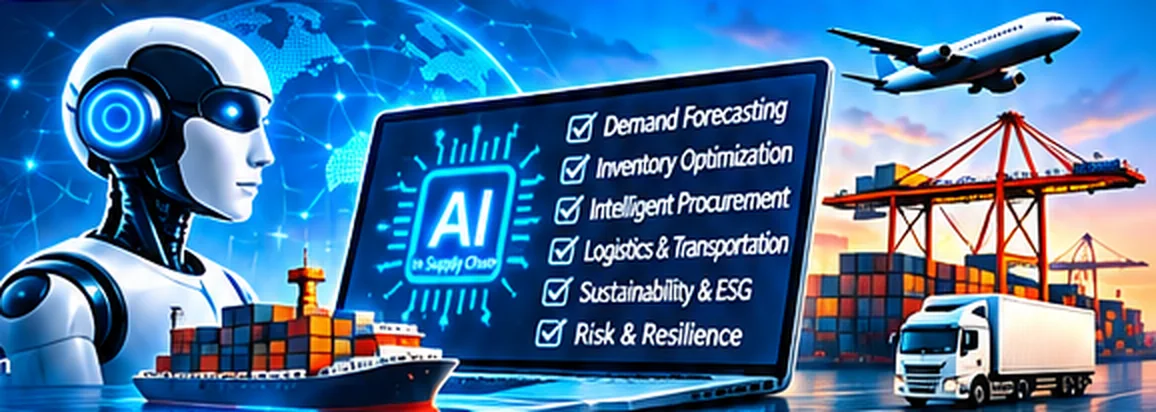
Apply AI Across Your End-to-End Supply Chain. Optimize Operations. Build Resilience. Drive Sustainable Value.

1. Program Overview

The Chartered Supply Chain Artificial Intelligence Analyst (CSAI)® is a professional certification that equips supply chain, procurement, logistics, and operations professionals with the knowledge and practical skills to apply Artificial Intelligence (AI) and machine learning (ML) across demand planning, procurement, inventory, logistics, sustainability, and risk management.

  • Use AI and predictive analytics for accurate demand forecasting and inventory optimization.
  • Apply intelligent procurement and supplier analytics to improve sourcing and supplier performance.
  • Optimize logistics, transportation, and warehouse operations using AI and automation.
  • Integrate sustainability and responsible AI practices into supply chain decisions.
  • Enhance supply chain resilience and risk management through AI-driven insights and digital technologies.

Program at a Glance

Certification TitleChartered Supply Chain Artificial Intelligence Analyst
DesignationCSAI®
Awarding OrganizationAAPSCM®
Certification LevelProfessional Certification
Curriculum8 Comprehensive Knowledge Domains
Learning ApproachIndustry-focused instruction, case studies, analytics exercises, and practical applications
Virtual Instructor-Led Training4 days, 2 hours daily (8 live hours)
Self-Paced LearningFlexible independent study with complimentary exam preparation resources
Assessment Options (Virtual Instructor-Led)Choice of Certification Exam or Applied Capstone Project
Assessment (Self-Paced)Certification Exam Only (100 MCQs)
Certification Validity3 years (renewable per AAPSCM® policy)
Virtual Training Fee$1,200 USD
Self-Paced Fee (Exam Only)$399.99 USD
International ParticipationInternational applicants are welcome

Key Benefits for Supply Chain Professionals

Sustainability & ESG Focus

Support responsible and sustainable supply chain practices using AI analytics.

Risk & Resilience

Predict, detect, and mitigate supply chain disruptions and supplier risks.

Program Video

3. Certification Learning Outcomes

Upon successful completion, you will be able to:

  • Explain and apply AI and machine learning in supply chain operations.
  • Develop demand forecasts and optimize inventory using predictive models.
  • Use AI for supplier evaluation, procurement automation, and spend analytics.
  • Analyze logistics, transportation, and warehouse operations with AI tools.
  • Apply big data and analytics to improve supply chain performance and visibility.
  • Incorporate sustainability, ESG, and responsible AI into supply chain decisions.
  • Evaluate blockchain and smart contract applications for supply chain traceability.
  • Assess supply chain risks and develop resilience and crisis response plans.

A Practical, Industry-Aligned Certification Curriculum

Domain 1

AI Foundations in Supply Chain Management

Domain 2

Demand Forecasting & Inventory Optimization

Domain 3

Intelligent Procurement & Supplier Management

Domain 4

AI in Logistics & Transportation Management

Domain 5

Big Data & Advanced Supply Chain Analytics

Domain 6

AI for Sustainability & Ethical Supply Chains

Domain 7

Blockchain–AI Synergy in Supply Chains

Domain 8

AI-Powered Risk Management & Crisis Response

AC-SCAI®(AI Supply Chain) Professional
Foundational Competence
➜
CSAI®(Supply Chain AI Analyst)
Applied Analytics & Operations
(THIS PROGRAM)
➜
CSAI-M®(AI Manager)
AI Strategy, Governance & Transformation
➜
CSAI-E®(Executive Diploma)
Enterprise AI Leadership, Policy, Research & Global Strategy
ISO 9001 Quality Management
ISO/IEC 27001 Information Security
ISO 20400 Sustainable Procurement
ISO 31000 Risk Management
ISO/IEC 28000 Supply Chain Security
ISO/IEC 42001 AI Management Systems
Training OptionDurationAssessmentFee
Virtual Instructor-Led (Online)4 Days (2 Hours Daily) 8 Live HoursChoice of: – Certification Exam (100 MCQs, 90 Minutes), or – Applied Capstone Project$1,200 USD
Self-Paced Learning (Exam Only)Flexible (Independent Study)• Certification Exam Only (100 MCQs, 90 Minutes) • Passing Score: 70%$399.99 USD
  • AI Supply Chain Analyst
  • Supply Chain Digital Transformation Manager
  • AI-Powered Procurement Specialist
  • Supply Chain Data Analyst
  • Intelligent Logistics Analyst
  • Demand Planning Analyst
  • Inventory Optimization Specialist
  • Supply Chain Risk Analyst
  • Supply Chain Sustainability Analyst
  • AI Supply Chain Consultant
Intelligent Planning & Forecasting
Optimized Logistics & Distribution
Inventory Efficiency & Availability
Supplier Performance & Compliance
Sustainable & Responsible Supply Chains
Resilient & Future-Ready Operations
Get Chartered in Supply Chain AIwith AAPSCM®
Enroll in
CSAI®

Choose Your Pathway and Enroll

More about CSAI®

The complete program information, in one place. Swipe sideways or use the arrows to browse each topic.

1
Comprehensive Certification Program Overview

The Chartered Supply Chain Artificial Intelligence Analyst (CSAI)® is a specialized professional certification developed and awarded by the American Association of Procurement, Supply Chain & Tourism Management (AAPSCM®). The program is designed to equip supply chain professionals, procurement specialists, logistics managers, inventory analysts, business intelligence practitioners, and digital transformation leaders with the knowledge and analytical competencies required to apply artificial intelligence (AI), machine learning (ML), predictive analytics, and intelligent automation across modern supply chain operations.

Global supply chains operate in increasingly complex environments characterized by fluctuating consumer demand, geopolitical uncertainty, transportation disruptions, supplier risks, rising operational costs, sustainability expectations, and rapid technological change. Organizations must make faster and more informed decisions while maintaining operational efficiency, supply continuity, financial accountability, and customer satisfaction.

Traditional supply chain planning approaches often rely on historical information, manual forecasting, disconnected enterprise systems, spreadsheets, and reactive decision-making. Although these methods remain useful, they may be insufficient for organizations managing large datasets, rapidly changing demand patterns, and interconnected global supply networks.

Artificial intelligence offers opportunities to improve these processes through machine learning, advanced forecasting, intelligent inventory optimization, automated supplier evaluation, predictive maintenance, real-time logistics analytics, and data-supported risk management.

The CSAI® certification provides an integrated learning framework that connects foundational AI concepts with practical supply chain applications. Participants develop the ability to interpret supply chain data, evaluate AI-driven technologies, identify automation opportunities, develop analytical recommendations, and support the implementation of intelligent supply chain solutions.

The curriculum covers eight major professional knowledge domains, including AI fundamentals, demand forecasting, intelligent procurement, logistics optimization, big data analytics, sustainable supply chains, blockchain integration, and AI-powered risk management.

The certification also emphasizes responsible AI deployment, data quality, cybersecurity, human oversight, ethical decision-making, and organizational readiness.

The primary objective of CSAI® is to prepare professionals to analyze, evaluate, and support AI-enabled supply chain transformation initiatives that improve operational performance, resilience, transparency, and strategic decision-making.

Certification at a Glance

ComponentDetails
Certification TitleChartered Supply Chain Artificial Intelligence Analyst
Professional DesignationCSAI®
Awarding OrganizationAAPSCM®
Certification CategoryArtificial Intelligence and Supply Chain Management
Professional LevelProfessional / Analyst
Curriculum8 Core Knowledge Domains
Self-Paced LearningIndependent examination preparation
Self-Paced AssessmentCertification examination only
Virtual Instructor-Led Training4 days, 2 hours daily
Total Live Instruction8 hours
Virtual Assessment OptionsCertification examination or approved applied capstone project
Examination Format100 multiple-choice questions
Examination Duration90 minutes
Minimum Passing Score70%
Certification Validity3 years
Self-Paced Fee$399.99 USD
Virtual Instructor-Led Fee$1,200 USD
Primary FocusAI analytics, demand forecasting, procurement intelligence, logistics optimization, automation, sustainability, and supply chain resilience

The $399.99 self-paced fee follows the established AAPSCM® standard pricing; the supplied CSAI® text does not state that amount. The assessment and examination provisions are presented using the previously established AAPSCM® certification framework and should be confirmed for this credential before publication.

2
Why Artificial Intelligence Matters in Modern Supply Chain Management

AI is changing how organizations forecast demand, manage suppliers, optimize inventory, coordinate logistics, evaluate risks, and respond to operational disruptions.

Rather than relying exclusively on historical reports and manual analysis, AI-enabled systems can process large datasets, identify complex patterns, generate forecasts, and support timely operational decisions.

Why CSAI® Matters

Scroll horizontally

01

Intelligent Demand Forecasting

Apply predictive analytics to demand patterns, seasonal fluctuations, market signals, and planning decisions.

02

Inventory Optimization

Use analytical models to support stock availability, replenishment decisions, and working capital efficiency.

03

AI-Enabled Procurement

Improve supplier evaluation, sourcing intelligence, purchasing automation, and procurement risk monitoring.

04

Smart Logistics

Explore route optimization, fleet analytics, warehouse automation, and intelligent transportation systems.

05

Predictive Risk Management

Identify potential disruptions, evaluate risk indicators, and support proactive contingency planning.

06

Supply Chain Sustainability

Use data analytics to monitor emissions, waste, supplier practices, and sustainability performance.

07

Digital Supply Chain Visibility

Integrate information across procurement, warehousing, transportation, and enterprise systems.

08

Responsible AI Leadership

Evaluate data quality, cybersecurity, AI governance, human oversight, and implementation risks.

2.1 Improved Forecasting Accuracy

AI and machine learning can analyze historical demand, promotional activities, seasonal variations, economic indicators, and other relevant variables.

These capabilities can improve forecasting when models are appropriately designed, trained, validated, and monitored.

2.2 More Effective Inventory Management

AI-supported inventory models can help organizations evaluate safety stock requirements, reorder points, lead-time variability, and inventory turnover.

The goal is to balance product availability with inventory carrying costs and operational risk.

2.3 Intelligent Supplier Evaluation

AI tools can support supplier segmentation, performance monitoring, financial risk analysis, compliance reviews, and sourcing recommendations.

However, automated recommendations require appropriate data verification and professional oversight.

2.4 Optimized Transportation and Logistics

AI-enabled transportation systems can analyze routes, vehicle capacity, delivery schedules, traffic patterns, fuel consumption, and operational constraints.

These applications may improve logistics planning and support more efficient resource utilization.

2.5 Proactive Supply Chain Risk Management

Predictive analytics can assist organizations in identifying potential disruptions related to supplier failures, transportation delays, demand volatility, extreme weather, and geopolitical developments.

2.6 Stronger Supply Chain Visibility

Data integration and analytical dashboards can improve visibility across procurement, inventory, transportation, warehousing, and customer fulfillment activities.

2.7 Improved Sustainability Monitoring

AI-based analytical tools can support emissions estimation, waste monitoring, resource optimization, and sustainability performance reporting.

2.8 Future-Ready Professional Skills

As organizations introduce AI into supply chain operations, professionals must understand how to interpret analytical outputs, evaluate technology solutions, and translate insights into practical decisions.

3
Why Choose the CSAI® Certification Through AAPSCM®?

3.1 Specialized AI and Supply Chain Expertise

CSAI® integrates artificial intelligence, machine learning, analytics, and automation with established supply chain management principles.

The program emphasizes practical business applications rather than treating AI as an isolated technology discipline.

3.2 Comprehensive, Industry-Relevant Curriculum

The eight knowledge domains cover major supply chain functions, including procurement, demand planning, inventory management, warehousing, transportation, sustainability, and risk management.

3.3 Practical Analytical Competencies

Candidates learn to interpret supply chain information, evaluate forecasting models, assess supplier risks, analyze operational performance, and develop data-supported recommendations.

3.4 Flexible Learning Options

AAPSCM® offers independent self-paced preparation and scheduled virtual instructor-led training to accommodate different professional learning needs.

3.5 Professional Career Development

The certification can complement existing experience and qualifications for professionals seeking responsibilities in supply chain analytics, digital procurement, intelligent logistics, and transformation initiatives.

3.6 Responsible Technology Adoption

The program addresses important considerations involving data accuracy, algorithmic bias, information security, model validation, human oversight, and organizational accountability.

3.7 International Supply Chain Applications

The curriculum examines AI applications relevant to manufacturing, logistics, healthcare, retail, energy, government, transportation, and global trade.

3.8 Continuing Professional Development

The three-year certification cycle encourages professionals to maintain current knowledge of emerging AI technologies and evolving supply chain practices.

4
Target Audience: Who Should Enroll?

The CSAI® certification is designed for professionals who analyze, manage, optimize, or support supply chain operations and digital transformation.

Supply Chain and Operations Professionals

  • Supply Chain Analysts
  • Supply Chain Managers
  • Operations Managers
  • Supply Chain Coordinators
  • Supply Chain Planning Specialists
  • Business Operations Analysts
  • Supply Chain Transformation Professionals

Procurement and Supplier Management Professionals

  • Procurement Analysts
  • Purchasing Managers
  • Strategic Sourcing Specialists
  • Supplier Relationship Managers
  • Category Managers
  • Vendor Risk Analysts
  • Procurement Technology Specialists

Logistics and Transportation Professionals

  • Logistics Analysts
  • Transportation Managers
  • Distribution Managers
  • Fleet Operations Analysts
  • Freight Planning Specialists
  • Logistics Technology Professionals

Inventory and Warehouse Professionals

  • Inventory Analysts
  • Demand Planners
  • Inventory Control Managers
  • Warehouse Operations Managers
  • Materials Planning Specialists
  • Distribution Center Analysts

Artificial Intelligence and Analytics Professionals

  • Business Intelligence Analysts
  • Data Analysts
  • AI Business Analysts
  • Predictive Analytics Specialists
  • Machine Learning Practitioners
  • Digital Transformation Consultants

Executives and Emerging Leaders

  • Supply Chain Directors
  • Operations Directors
  • Digital Transformation Managers
  • Technology Innovation Managers
  • Enterprise Planning Leaders
  • Supply Chain Consultants

The certification is also suitable for professionals transitioning into AI-enabled supply chain analysis who possess foundational business, technology, or supply chain knowledge.

5
Comprehensive Certification Learning Objectives

Upon successful completion of the CSAI® certification program, candidates should be able to demonstrate the following competencies.

A. Artificial Intelligence Foundations

  • Explain fundamental AI, machine learning, deep learning, and natural language processing concepts.
  • Identify AI applications across major supply chain functions.
  • Evaluate organizational readiness for AI adoption.
  • Distinguish appropriate AI use cases from conventional automation.
  • Explain responsible AI principles and limitations.

B. Demand Forecasting and Inventory Optimization

  • Interpret demand forecasting data.
  • Explain predictive forecasting models.
  • Evaluate inventory optimization strategies.
  • Identify appropriate replenishment indicators.
  • Analyze forecasting errors and uncertainty.
  • Recommend improvements to demand and inventory planning.

C. Intelligent Procurement and Supplier Management

  • Evaluate AI-assisted supplier selection.
  • Analyze supplier performance information.
  • Identify procurement automation opportunities.
  • Explain predictive supplier risk assessment.
  • Interpret procurement analytics.
  • Recommend supplier management improvements.

D. Logistics and Transportation Intelligence

  • Explain AI applications in transportation management.
  • Evaluate route optimization strategies.
  • Analyze logistics performance indicators.
  • Identify warehouse automation opportunities.
  • Explain predictive maintenance applications.
  • Assess intelligent logistics technologies.

E. Big Data and Supply Chain Analytics

  • Identify relevant supply chain data sources.
  • Explain data preparation and integration.
  • Interpret structured and unstructured information.
  • Evaluate analytical dashboards.
  • Apply supply chain KPI concepts.
  • Develop data-driven operational recommendations.

F. Sustainability and Ethical Supply Chains

  • Explain AI-supported sustainability monitoring.
  • Evaluate supply chain environmental indicators.
  • Identify ethical sourcing risks.
  • Explain circular economy applications.
  • Assess responsible AI considerations.
  • Recommend sustainability improvement strategies.

G. Blockchain and AI Integration

  • Explain blockchain fundamentals.
  • Identify blockchain traceability applications.
  • Evaluate AI and blockchain integration opportunities.
  • Explain smart contract concepts.
  • Identify cybersecurity and information governance risks.

H. Risk Management and Supply Chain Resilience

  • Identify supply chain risk indicators.
  • Explain predictive risk monitoring.
  • Evaluate disruption scenarios.
  • Develop risk mitigation recommendations.
  • Explain business continuity planning.
  • Recommend AI-supported resilience strategies.
6
Comprehensive CSAI® Certification Curriculum

Eight Core Professional Knowledge Domains

Explore the Eight Knowledge Domains

Scroll horizontally

DOMAIN 01

Foundations of AI in Supply Chain Management

AI fundamentals, machine learning, deep learning, NLP, digital transformation, and governance.

DOMAIN 02

AI-Driven Demand Forecasting & Inventory Optimization

Predictive forecasting, demand planning, inventory optimization, safety stock, and analytical performance.

DOMAIN 03

Intelligent Procurement & Supplier Relationship Management

Supplier analytics, intelligent sourcing, procurement automation, supplier risks, and compliance.

DOMAIN 04

AI in Logistics & Transportation Management

Route optimization, fleet analytics, warehouse automation, robotics, and predictive maintenance.

DOMAIN 05

Big Data & Advanced Supply Chain Analytics

Data integration, ERP, WMS, analytical modeling, visualization, dashboards, and business intelligence.

DOMAIN 06

AI for Sustainability & Ethical Supply Chains

Emissions monitoring, sustainable sourcing, ethical AI, ESG indicators, and circular economy.

DOMAIN 07

Blockchain–AI Synergy in Supply Chains

Distributed ledgers, traceability, smart contracts, digital verification, and cybersecurity.

DOMAIN 08

AI-Powered Risk Management & Crisis Response

Predictive risk monitoring, disruption scenarios, crisis response, business continuity, and resilience.

Domain 1: Foundations of Artificial Intelligence in Supply Chain Management

Domain Objective: Establish a comprehensive understanding of AI technologies, machine learning principles, data-driven decision-making, and their practical applications across global supply chain operations.

Core Topics

  • Evolution of supply chain management
  • Digital supply chain transformation
  • Artificial intelligence fundamentals
  • Machine learning concepts
  • Supervised and unsupervised learning
  • Deep learning fundamentals
  • Natural language processing
  • Generative AI in supply chains
  • Predictive versus prescriptive analytics
  • Intelligent automation
  • AI-assisted supply chain planning
  • Supply chain digital maturity
  • AI technology adoption frameworks
  • Enterprise system integration
  • AI implementation opportunities
  • Data quality and reliability
  • AI model validation
  • Algorithmic bias
  • Human-in-the-loop decision-making
  • Responsible AI governance
  • AI implementation challenges
  • Supply chain AI performance measurement

Practical Learning Activity: Assess a hypothetical organization's supply chain processes and identify opportunities for AI-supported demand planning, procurement, inventory management, and logistics improvement.

Expected Competency: Candidates can explain AI concepts, evaluate potential supply chain applications, and recommend responsible technology adoption strategies.

Domain 2: AI-Driven Demand Forecasting & Inventory Optimization

Domain Objective: Develop the ability to evaluate AI-enabled forecasting models, analyze inventory information, and recommend improvements to demand planning and inventory management.

Core Topics

  • Demand forecasting fundamentals
  • Historical demand analysis
  • Demand seasonality
  • Trend identification
  • Demand variability
  • Forecasting data requirements
  • Time-series forecasting
  • Machine learning forecasting concepts
  • Regression-based forecasting
  • Forecast model evaluation
  • Forecast accuracy indicators
  • Mean absolute error
  • Mean absolute percentage error
  • Demand sensing concepts
  • Inventory classification
  • ABC inventory analysis
  • Safety stock determination
  • Reorder point analysis
  • Economic order quantity
  • Inventory turnover
  • Lead-time variability
  • Stockout risk
  • Excess inventory
  • Inventory carrying costs
  • AI-supported replenishment
  • Inventory optimization scenarios
  • Demand planning dashboards

Practical Learning Activity: Analyze a sample dataset containing historical sales, inventory levels, supplier lead times, and demand variability. Develop forecasting recommendations and an inventory optimization plan.

Expected Competency: Candidates can interpret forecasting outputs and recommend data-driven inventory policies.

Domain 3: Intelligent Procurement & Supplier Relationship Management

Domain Objective: Develop practical competencies in AI-supported procurement analysis, supplier evaluation, supplier risk management, and intelligent purchasing processes.

Core Topics

  • Digital procurement fundamentals
  • AI procurement applications
  • Procurement spend analysis
  • Intelligent supplier discovery
  • Supplier segmentation
  • Supplier qualification
  • AI-assisted supplier evaluation
  • Supplier performance scoring
  • Supplier risk indicators
  • Supplier financial risk
  • Supplier operational risk
  • Supplier cybersecurity exposure
  • Procurement fraud indicators
  • Supplier compliance monitoring
  • Predictive supplier analytics
  • Strategic sourcing intelligence
  • AI-assisted contract analysis
  • Purchase requisition automation
  • Purchase order processing
  • Robotic Process Automation
  • Supplier communication automation
  • Supplier relationship management
  • Procurement analytics dashboards
  • Procurement governance
  • Responsible supplier decision-making

Practical Learning Activity: Develop a supplier evaluation model using sample supplier performance, delivery, pricing, quality, and risk information.

Expected Competency: Candidates can interpret supplier analytics and recommend procurement process improvements.

Domain 4: AI in Logistics & Transportation Management

Domain Objective: Develop knowledge of AI-enabled logistics systems, transportation optimization, warehouse automation, predictive maintenance, and intelligent distribution operations.

Core Topics

  • Intelligent logistics fundamentals
  • Transportation management systems
  • AI-supported transportation planning
  • Route optimization
  • Vehicle routing problems
  • Delivery scheduling
  • Fleet utilization
  • Transportation cost analysis
  • Fuel consumption optimization
  • Logistics demand forecasting
  • Real-time shipment tracking
  • Estimated delivery time prediction
  • Last-mile delivery optimization
  • Warehouse management systems
  • Warehouse robotics
  • Autonomous mobile robots
  • Automated guided vehicles
  • Warehouse picking automation
  • Inventory movement optimization
  • Predictive maintenance
  • Equipment failure indicators
  • Logistics performance analytics
  • Warehouse productivity indicators
  • Transportation risk monitoring
  • Logistics technology governance
  • Intelligent distribution planning

Practical Learning Activity: Evaluate a hypothetical distribution network and develop recommendations for route optimization, warehouse automation, and delivery performance improvement.

Expected Competency: Candidates can assess intelligent logistics technologies and recommend appropriate operational applications.

Domain 5: Big Data & Advanced Analytics in Supply Chains

Domain Objective: Develop the ability to interpret complex supply chain information, evaluate data integration approaches, and use business intelligence concepts to support operational decision-making.

Core Topics

  • Big data fundamentals
  • Supply chain data ecosystems
  • Structured data
  • Unstructured data
  • Data collection
  • Data cleansing
  • Data quality management
  • Enterprise Resource Planning systems
  • Warehouse Management Systems
  • Transportation Management Systems
  • Procurement system integration
  • Data warehouses
  • Data lakes
  • Data governance
  • Descriptive analytics
  • Diagnostic analytics
  • Predictive analytics
  • Prescriptive analytics
  • Supply chain KPI development
  • Procurement performance dashboards
  • Inventory analytics
  • Transportation analytics
  • Supplier performance visualization
  • Microsoft Excel analytical tools
  • Microsoft Power BI
  • Tableau
  • Python analytics concepts
  • Analytical storytelling
  • Executive decision dashboards
  • Data security and privacy

Practical Learning Activity: Develop a supply chain performance dashboard prototype incorporating inventory, supplier performance, procurement spending, and logistics indicators.

Expected Competency: Candidates can interpret supply chain data, evaluate analytical outputs, and communicate evidence-based recommendations.

Domain 6: AI for Sustainability & Ethical Supply Chain Practices

Domain Objective: Develop knowledge of AI-supported sustainability analytics, ethical sourcing, environmental performance monitoring, and responsible supply chain management.

Core Topics

  • Sustainable supply chain management
  • Environmental sustainability indicators
  • Social responsibility in supply chains
  • Supply chain governance
  • Carbon emissions concepts
  • Scope 1, Scope 2, and Scope 3 emissions
  • Supply chain emissions estimation
  • Transportation emissions analysis
  • Energy efficiency
  • Waste reduction
  • Sustainable procurement
  • Supplier sustainability assessment
  • Ethical sourcing
  • Human rights due diligence concepts
  • Supplier labor practice monitoring
  • Circular economy principles
  • Reverse logistics
  • Resource efficiency
  • Sustainable packaging
  • AI-supported environmental monitoring
  • Sustainability data quality
  • Environmental reporting
  • Responsible AI
  • AI energy and resource impacts
  • Sustainability performance dashboards
  • Greenwashing risk
  • Sustainability improvement planning

Practical Learning Activity: Evaluate a sample supply chain sustainability scenario and recommend AI-supported methods for monitoring emissions, supplier performance, waste, and resource efficiency.

Expected Competency: Candidates can assess sustainability indicators and recommend responsible, data-supported improvements.

Domain 7: Blockchain–AI Synergy in Supply Chains

Domain Objective: Develop knowledge of blockchain fundamentals, AI-blockchain integration, transaction traceability, smart contracts, and secure supply chain information sharing.

Core Topics

  • Blockchain fundamentals
  • Distributed ledger technology
  • Blockchain architecture
  • Public and private blockchains
  • Permissioned blockchain networks
  • Cryptographic hashing
  • Digital signatures
  • Transaction verification
  • Blockchain consensus concepts
  • Supply chain traceability
  • Product provenance
  • Supplier verification
  • Digital procurement records
  • Smart contract fundamentals
  • Automated contract conditions
  • Shipment milestone verification
  • Blockchain-enabled audit trails
  • AI-supported blockchain analytics
  • Transaction anomaly detection
  • Digital identity
  • Blockchain interoperability
  • Enterprise system integration
  • Blockchain scalability
  • Data privacy
  • Cybersecurity considerations
  • Smart contract vulnerabilities
  • Blockchain governance
  • Technology implementation feasibility

Practical Learning Activity: Design a conceptual blockchain-supported supply chain traceability framework incorporating supplier verification, shipment milestones, transaction records, and AI-supported monitoring.

Expected Competency: Candidates can explain blockchain applications and evaluate their integration with AI-supported supply chain systems.

Domain 8: AI-Powered Risk Management & Crisis Response

Domain Objective: Develop the ability to evaluate supply chain risks, interpret predictive warning indicators, and recommend AI-supported resilience and business continuity strategies.

Core Topics

  • Supply chain risk management
  • Risk identification
  • Risk assessment
  • Risk probability and impact
  • Supplier disruption risks
  • Transportation disruption risks
  • Geopolitical risks
  • Cybersecurity risks
  • Natural disaster exposure
  • Demand volatility
  • Inventory shortages
  • Supplier concentration risk
  • Predictive risk analytics
  • Early warning indicators
  • AI-supported risk monitoring
  • Risk scoring models
  • Scenario analysis
  • Supply chain stress testing
  • Disruption simulation
  • Crisis response planning
  • Business continuity management
  • Supplier diversification
  • Alternative sourcing strategies
  • Inventory contingency planning
  • Logistics contingency planning
  • Supply chain resilience indicators
  • Incident communication
  • Recovery performance measurement
  • AI governance during crises
  • Continuous risk monitoring

Practical Learning Activity: Develop an AI-supported supply chain disruption response plan addressing supplier failure, transportation delays, inventory shortages, and operational recovery.

Expected Competency: Candidates can evaluate supply chain risks and recommend practical resilience strategies.

7
Training Delivery Options and Program Fees

AAPSCM® offers two professional certification preparation pathways.

Option 1: Self-Paced Learning and Certification Examination

Program Fee: $399.99 USD

The self-paced pathway is designed for professionals who prefer flexible independent preparation without scheduled instructor-led sessions.

Included Resources
  • Certification examination registration
  • Complimentary examination guide
  • Complimentary practice questions
  • Certification knowledge domain information
  • Independent examination preparation guidance
  • Examination administration
  • Certification assessment processing
Mandatory Assessment Requirement

Self-paced candidates must complete and pass the CSAI® certification examination.

The capstone project is not available as an alternative assessment under the self-paced pathway.

Option 2: Virtual Instructor-Led Training

Program Fee: $1,200 USD

Duration: 4 Days | 2 Hours Daily | 8 Live Instructional Hours

The virtual instructor-led pathway provides structured online instruction delivered by qualified professionals.

Training Features
  • Four days of live virtual instruction
  • Two instructional hours daily
  • Eight core knowledge domains
  • Instructor-led explanations
  • Supply chain AI demonstrations
  • Practical case studies
  • Predictive analytics examples
  • Procurement and logistics scenarios
  • Supply chain risk exercises
  • Digital learning resources
  • Certification assessment guidance
Virtual Assessment Options

Participants select one of two approved assessment pathways:

Pathway A — Certification Examination: Complete the 100-question multiple-choice examination and achieve a minimum score of 70%.

Pathway B — Applied Capstone Project: Complete an approved AI-enabled supply chain analysis and transformation project and achieve a minimum evaluation score of 70%.

Training Comparison

ComponentSelf-PacedVirtual Instructor-Led
Fee$399.99$1,200
Learning FormatIndependentLive online
DurationFlexible4 days
Live InstructionNot included8 hours
Exam GuideIncludedIncluded
Practice QuestionsIncludedIncluded
Certification ExaminationMandatoryOptional assessment choice
Capstone ProjectNot availableOptional assessment choice
Passing Requirement70%70%
Certification AwardAfter passing examAfter passing selected assessment
8
Certification Examination Structure

The CSAI® examination evaluates candidates' understanding of AI applications, machine learning, forecasting, intelligent procurement, logistics optimization, sustainability, blockchain integration, and supply chain risk management.

Examination Requirements

ComponentRequirement
Examination TypeMultiple-choice questions
Total Questions100
Examination Duration90 minutes
Minimum Passing Score70%
Minimum Correct Answers70
Knowledge Coverage8 core domains
Self-Paced CandidatesExamination mandatory
Virtual Instructor-Led CandidatesExamination or approved capstone
Certification Validity3 years

Examination Content Blueprint

Knowledge DomainQuestionsWeight
Domain 1: AI Foundations1515%
Domain 2: Demand Forecasting & Inventory1515%
Domain 3: Intelligent Procurement1515%
Domain 4: AI Logistics & Transportation1515%
Domain 5: Big Data & Analytics1515%
Domain 6: Sustainability & Ethical Practices1010%
Domain 7: Blockchain–AI Integration55%
Domain 8: Risk Management & Resilience1010%
Total100100%

The distribution above is a proposed examination blueprint for AAPSCM® approval, not a confirmed existing official question allocation.

Examination Question Categories

Candidates may encounter:

  • Conceptual AI and supply chain questions
  • Scenario-based forecasting questions
  • Inventory optimization questions
  • Supplier risk assessment scenarios
  • Logistics and transportation analysis
  • Data interpretation questions
  • Sustainability and governance questions
  • Blockchain applications
  • Supply chain disruption scenarios
9
Applied Capstone Project — Virtual Instructor-Led Candidates Only

Optional Alternative to the Examination

Capstone Title

Designing an AI-Enabled Intelligent Supply Chain Optimization and Resilience Framework

The capstone is designed to assess a candidate's ability to apply AI, machine learning, analytics, and supply chain management principles to a practical organizational challenge.

It is available only to eligible virtual instructor-led candidates who select the capstone assessment pathway.

Capstone Scenario

A multinational manufacturing and distribution company is experiencing demand forecasting inaccuracies, excessive inventory, supplier delivery delays, transportation inefficiencies, and limited visibility across its supply chain.

Senior management seeks to implement AI-enabled analytical capabilities to improve forecasting, inventory management, procurement, logistics, sustainability, and resilience.

The candidate serves as a supply chain AI analyst responsible for evaluating current operations and developing a comprehensive improvement framework.

Required Capstone Components

Part 1 — Supply Chain Assessment

Evaluate the organization's supply chain structure, operational challenges, data availability, and performance gaps.

Part 2 — AI Readiness Assessment

Identify technology requirements, data quality concerns, analytical capabilities, organizational readiness, and governance needs.

Part 3 — Demand Forecasting Model

Develop a conceptual or practical forecasting model using relevant historical demand information and analytical indicators.

Part 4 — Inventory Optimization

Evaluate stock levels, safety stock, replenishment policies, lead-time variability, and inventory performance.

Part 5 — Intelligent Procurement Strategy

Develop supplier evaluation, procurement analytics, and supplier risk monitoring recommendations.

Part 6 — Logistics Optimization

Recommend AI-supported transportation, distribution, routing, or warehouse improvements.

Part 7 — Sustainability and Responsible AI

Identify sustainability indicators, environmental considerations, and responsible AI governance requirements.

Part 8 — Supply Chain Risk and Resilience

Develop a predictive risk monitoring and disruption response framework.

Part 9 — Implementation Roadmap

Present implementation phases, stakeholder responsibilities, milestones, training requirements, technology considerations, and performance indicators.

Part 10 — Executive Recommendations

Summarize the proposed improvements, anticipated business value, implementation priorities, and risk mitigation measures.

Capstone Deliverables

Candidates submit a professional report containing:

  • Executive summary
  • Organizational assessment
  • AI adoption strategy
  • Demand forecasting analysis
  • Inventory optimization recommendations
  • Supplier evaluation framework
  • Logistics optimization proposal
  • Sustainability considerations
  • Supply chain risk assessment
  • Implementation roadmap
  • Performance indicators
  • Conclusions and recommendations

Supporting materials may include spreadsheets, dashboards, process diagrams, forecasting models, supplier scorecards, and analytical exhibits.

Recommended Capstone Evaluation Rubric

Assessment CriteriaWeight
Supply Chain Assessment10%
AI Readiness and Technology Strategy10%
Demand Forecasting15%
Inventory Optimization15%
Intelligent Procurement10%
Logistics Optimization10%
Sustainability and Responsible AI10%
Risk Management and Resilience10%
Implementation Roadmap5%
Report Quality and Professional Presentation5%
Total100%

Minimum Passing Score: 70%.

This rubric is a recommended framework requiring AAPSCM® assessment approval.

10
CSAI® Professional Competency Framework

The CSAI® professional competency framework integrates analytical knowledge, supply chain expertise, technology awareness, and responsible decision-making.

Core Competency Areas

Scroll horizontally

01

AI & Machine Learning Literacy

Understand fundamental AI concepts, analytical methods, model limitations, and responsible AI practices.

02

Demand Planning Intelligence

Interpret demand information, evaluate forecasting approaches, and recommend planning improvements.

03

Inventory Analytics

Assess stock levels, replenishment requirements, inventory costs, and inventory performance.

04

Intelligent Procurement

Evaluate supplier data, sourcing decisions, procurement automation, and supplier risk indicators.

05

Smart Logistics

Analyze transportation, distribution, warehouse operations, and logistics optimization opportunities.

06

Supply Chain Data Intelligence

Integrate information, evaluate dashboards, interpret KPIs, and communicate analytical insights.

07

Sustainability Analytics

Assess environmental indicators, ethical sourcing information, and sustainability performance.

08

Blockchain Applications

Explain distributed ledgers, transaction traceability, smart contracts, and verification.

09

Predictive Risk Management

Evaluate disruption indicators, risk models, and supply chain resilience strategies.

10

Digital Transformation Support

Develop AI implementation recommendations, governance controls, and organizational improvement plans.

11
International Standards and Professional Frameworks

The CSAI® curriculum incorporates concepts from internationally established standards and professional frameworks relevant to supply chain management, AI governance, risk management, information security, sustainability, and organizational resilience.

ISO/IEC 42001

AI Management Systems

Governance and management of organizational AI systems.

ISO/IEC 27001

Information Security

Information security management and protection of organizational data.

ISO 31000

Risk Management

Risk identification, analysis, evaluation, and treatment principles.

ISO 28000

Supply Chain Security

Security management systems, including supply chain security.

ISO 20400

Sustainable Procurement

Guidance for integrating sustainability into procurement.

ISO 22301

Business Continuity

Organizational business continuity management requirements.

ISO 9001

Quality Management

Quality management and continual improvement requirements.

NIST AI RMF

AI Risk Management

Framework for identifying and managing AI risks.

ISO/IEC 17024

Personnel Certification

Requirements for bodies operating certification of persons.

Standards Clarification: Curriculum alignment and reference to these frameworks do not establish external accreditation, endorsement, or certification by the standards organizations.

12
AI and Supply Chain Technologies Covered

The program introduces participants to technology categories and representative tools used in AI-enabled supply chain operations.

Artificial Intelligence and Machine Learning

  • Machine learning platforms
  • Predictive analytics systems
  • Generative AI applications
  • Natural language processing tools
  • Forecasting algorithms
  • Intelligent decision-support systems

Supply Chain Analytics and Business Intelligence

  • Microsoft Excel
  • Microsoft Power BI
  • Tableau
  • Python analytical concepts
  • Data visualization systems
  • Supply chain KPI dashboards

Enterprise and Supply Chain Systems

  • Enterprise Resource Planning systems
  • Warehouse Management Systems
  • Transportation Management Systems
  • Supply Chain Planning platforms
  • Supplier Relationship Management systems
  • Procurement analytics applications

Intelligent Logistics and Automation

  • Warehouse robotics
  • Automated guided vehicles
  • Autonomous mobile robots
  • Transportation optimization systems
  • Predictive maintenance applications
  • Robotic Process Automation

Blockchain and Digital Traceability

  • Distributed ledger systems
  • Permissioned blockchain networks
  • Smart contract concepts
  • Digital identity verification
  • Product traceability platforms
  • Transaction verification systems

The program emphasizes conceptual understanding and practical business applications. Advanced programming is not a general prerequisite, and access to commercial software is not guaranteed unless expressly included in the training arrangement.

13
Industry Applications of CSAI® Competencies

Manufacturing

Demand forecasting, production planning, supplier analytics, inventory optimization, and predictive maintenance.

Retail and E-Commerce

Customer demand analysis, inventory replenishment, distribution planning, and order fulfillment optimization.

Healthcare and Pharmaceuticals

Medical supply planning, supplier risk monitoring, inventory availability, and healthcare logistics optimization.

Energy and Oil & Gas

Industrial procurement analytics, equipment supply planning, supplier risk assessment, and operational resilience.

Transportation and Logistics

Route optimization, fleet performance analytics, shipment monitoring, warehouse automation, and distribution planning.

Government and Public Sector

Public procurement analytics, supply chain risk management, emergency supply planning, and data-supported resource allocation.

Agriculture and Food Supply Chains

Demand forecasting, agricultural logistics, cold chain monitoring, food traceability, and supply disruption analysis.

Technology and Telecommunications

Technology supplier evaluation, equipment inventory management, procurement forecasting, and digital supply chain transformation.

14
Career Pathways and Professional Opportunities

CSAI® supports career development in analytical and technology-enabled supply chain functions.

Career PathwayProfessional Responsibilities
AI Supply Chain AnalystDemand analytics, forecasting, supply chain intelligence, and optimization
Supply Chain Digital Transformation ManagerAI adoption, operational improvement, and technology implementation
AI-Powered Procurement SpecialistIntelligent sourcing, supplier analytics, and procurement automation
Supply Chain Data AnalystData interpretation, dashboards, forecasting, and performance analysis
Intelligent Logistics AnalystTransportation analytics, routing, and logistics optimization
Demand Planning AnalystForecasting, inventory planning, and demand analysis
Inventory Optimization SpecialistReplenishment analytics, stock management, and inventory performance
Supply Chain Risk AnalystPredictive risk monitoring and resilience planning
Supply Chain Business Intelligence AnalystSupply chain reporting, KPIs, and analytical decision support
AI Supply Chain ConsultantTechnology assessment and supply chain transformation recommendations
Supply Chain Sustainability AnalystEnvironmental performance, responsible sourcing, and sustainability analytics
Supply Chain Automation SpecialistIntelligent workflows, process automation, and operational improvement

Career Growth and Compensation

Compensation and advancement depend on professional experience, educational qualifications, technical expertise, industry, geographic location, and employer requirements.

The CSAI® certification may complement existing qualifications and support professional development, but it does not guarantee employment, promotion, or a particular salary.

15
CSAI® Professional Certification Progression Pathway

The following is a recommended structured progression model.

FOUNDATIONAL

American Certified Supply Chain Artificial Intelligence Professional (AC-SCAI®)

Core AI and supply chain knowledge

PROFESSIONAL / ANALYST

Chartered Supply Chain Artificial Intelligence Analyst (CSAI®)

Applied analytics, forecasting, optimization, and risk intelligence

MANAGEMENT

Certified Supply Chain Artificial Intelligence Manager (CSAI-M®)

AI strategy, implementation management, governance, and organizational transformation

EXECUTIVE

Executive Diploma in Supply Chain Artificial Intelligence Expert (CSAI-E®)

Enterprise AI leadership, innovation strategy, policy, and executive transformation

Progression Level 1: Foundational Competence — AC-SCAI®

Designed for professionals seeking foundational knowledge of AI applications in supply chain management.

Progression Level 2: Analytical Specialization — CSAI®

Focuses on applying AI and analytics to demand forecasting, inventory management, procurement, logistics, sustainability, and risk management.

Progression Level 3: Management Leadership — CSAI-M®

Focuses on organizational AI strategy, technology implementation, operational leadership, AI governance, and digital transformation management.

Progression Level 4: Executive Expertise — CSAI-E®

Focuses on enterprise AI strategy, executive leadership, innovation governance, organizational transformation, and global supply chain intelligence.

Progression Policy Clarification: The original text refers to automatic exam-fee credits, accelerated eligibility, and progression within 12–18 months. Those benefits should be published only if they are supported by an approved AAPSCM® progression and fee-credit policy. Completion of one credential does not automatically establish eligibility for another unless the applicable admission requirements are met.

16
Certification Validity and Renewal

Certification Validity

The CSAI® certification is valid for three years from the date of issuance.

Continuing Professional Development

Certified professionals are encouraged to maintain knowledge in:

  • Artificial intelligence
  • Machine learning
  • Supply chain analytics
  • Demand forecasting
  • Intelligent procurement
  • Logistics automation
  • Blockchain applications
  • Supply chain cybersecurity
  • Sustainability analytics
  • Supply chain risk management
  • Responsible AI governance

Certification Renewal

Renewal is subject to the applicable AAPSCM® certification renewal policy.

Candidates should consult the official certification renewal requirements for information about continuing professional development credits, documentation, fees, and any reassessment obligations.

17
Corporate Training and Workforce Development

AAPSCM® offers corporate training opportunities for organizations seeking to strengthen employee competencies in AI-enabled supply chain management.

Suitable Organizations

  • Manufacturing enterprises
  • Logistics companies
  • Retail and e-commerce organizations
  • Government agencies
  • Healthcare institutions
  • Energy companies
  • Procurement departments
  • Distribution companies
  • Multinational corporations
  • Supply chain consulting firms

Corporate Training Benefits

  • Structured professional development
  • AI supply chain awareness
  • Demand forecasting instruction
  • Procurement analytics training
  • Logistics optimization concepts
  • Supplier risk management
  • Sustainability analytics
  • Digital transformation case studies
  • Group certification preparation

Corporate cohort arrangements and any applicable discounts are subject to AAPSCM® approval.

18
Frequently Asked Questions

1. What is the CSAI® certification?

2. Who awards CSAI®?

3. Who should enroll?

4. How many knowledge domains are included?

5. What is the self-paced fee?

6. What does self-paced enrollment include?

7. Can self-paced candidates submit a capstone instead of an exam?

8. What is the virtual instructor-led fee?

9. How long is the virtual training?

10. Can virtual candidates choose between an examination and capstone?

11. How many examination questions are included?

12. What is the examination passing score?

13. Is programming experience required?

14. Does the certification cover demand forecasting?

15. Does the certification cover procurement?

16. Does CSAI® include blockchain?

17. Does the program cover sustainability?

18. Does the program include cybersecurity and AI governance?

19. How long is the certification valid?

20. Does certification guarantee employment?

21. Can international professionals enroll?

22. Can employers arrange group training?

19
How to Enroll in CSAI®

Step 1 — Choose Your Training Pathway

Select self-paced certification examination preparation or virtual instructor-led training.

Step 2 — Complete Registration

Provide the required participant information and select the CSAI® certification.

Step 3 — Complete Payment

Pay the applicable certification or training fee through the official AAPSCM® enrollment system.

Step 4 — Access Preparation Resources

Self-paced candidates receive complimentary examination preparation resources. Virtual instructor-led candidates receive training information and applicable instructional materials.

Step 5 — Prepare for Assessment

Study the eight core knowledge domains. Eligible virtual instructor-led candidates may prepare an approved capstone project if they select that assessment pathway.

Step 6 — Complete the Assessment

Self-paced candidates must pass the certification examination. Virtual instructor-led candidates complete the approved assessment option.

Step 7 — Receive Certification

Candidates who satisfy the applicable assessment and administrative requirements become eligible to receive the CSAI® certification.

20
Begin Your CSAI® Professional Certification Journey

Build AI Expertise. Strengthen Supply Chain Intelligence. Lead Digital Transformation.

Artificial intelligence is changing how organizations forecast demand, evaluate suppliers, manage inventory, optimize transportation, monitor sustainability, and respond to disruptions.

The Chartered Supply Chain Artificial Intelligence Analyst (CSAI)® certification provides a structured pathway for developing the analytical, technological, and professional competencies needed to contribute to these changes.

Whether you are an experienced supply chain professional, an emerging analyst, a procurement specialist, or a digital transformation practitioner, CSAI® can support your development in intelligent supply chain management.

Analyze Intelligently. Forecast Accurately. Optimize Strategically. Lead Responsibly.

Developed and Awarded by AAPSCM® · www.aapscm.org

1 / 20Swipe or use the arrows →